
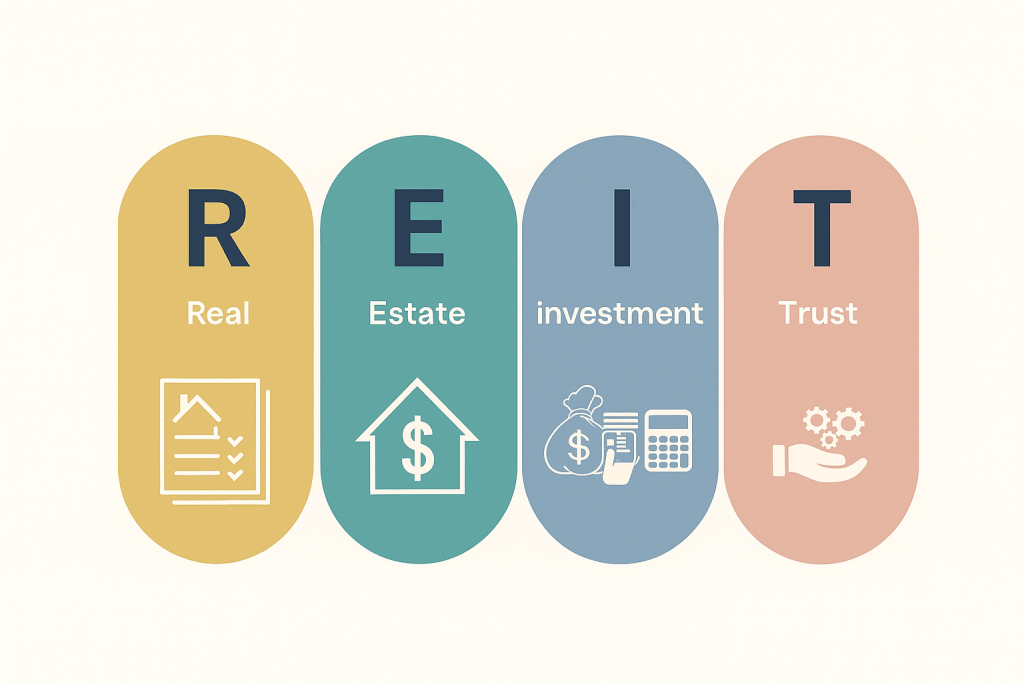
If you’re weighing your long-term options in the world of finance or real estate, chances are you’ve asked:
Is real estate investment trusts a good career path?
It’s a fair question—and a timely one. REITs (Real Estate Investment Trusts) have grown into a multi-trillion-dollar industry, offering a unique blend of real estate exposure and corporate structure. But are they right for you? And how do they compare to being a hands-on investor?
Let’s break it down.
What Is a Real Estate Investment Trust (REIT)?
A REIT is a company that owns, operates, or finances income-producing real estate. Think of them like mutual funds for real estate: they pool investor capital to buy large portfolios of commercial or residential properties.
REITs must:
- Return at least 90% of their taxable income to shareholders
- Operate within specific real estate sectors (e.g., retail, multifamily, industrial, healthcare)
- Be traded on public exchanges or managed privately
Working for a REIT often means a role in:
- Asset management
- Acquisitions
- Leasing
- Property operations
- Investor relations
- Finance or compliance
Is Working for a REIT a Good Career Path?
Yes—for the right person.
REITs can offer competitive salaries, long-term growth, and exposure to major real estate markets without the hands-on demands of property ownership.
Typical Salary Ranges
Compensation in the REIT world depends on the role, experience, and whether you’re at a public or private firm. Here’s a general range based on industry data:
| Role | Average Salary (2025 est.) | Notes |
|---|---|---|
| Analyst (entry-level) | $70,000–$95,000 | Often includes year-end bonuses |
| Associate (2–4 yrs experience) | $90,000–$130,000 | May include profit-sharing |
| Asset Manager | $110,000–$160,000 | Strong upside with performance incentives |
| VP / Director | $160,000–$250,000+ | Larger public REITs pay more |
| Acquisitions / Capital Markets | Varies widely | Performance-based comp can exceed base salary |
REITs also often offer 401(k) plans, equity compensation, and annual bonuses, especially in public companies. While not as lucrative as owning real estate directly, it’s a solid path for those looking for financial stability with exposure to large-scale real estate.
Pros:
- Financial stability – Most REITs are large, established firms with consistent income
- Learning environment – You’ll gain exposure to deals, financing structures, and institutional real estate
- Defined career tracks – Especially in roles like analyst, associate, or asset manager
- Real estate experience without capital risk – You’re in the game, but not putting your money at stake
Cons:
- Corporate structure – Less entrepreneurial than investing on your own
- Limited creativity – REITs are bound by compliance, shareholder goals, and market cycles
- High competition – Entry-level roles at top REITs can be tough to land without experience or a finance/real estate degree
Who Is a Career in REITs Right For?
REITs are a strong fit if you:
- Want exposure to real estate but prefer a W-2 structure
- Enjoy finance, modeling, or portfolio strategy
- Are comfortable with a corporate or institutional environment
- Prefer managing deals over managing tenants
They may be less ideal if your goal is to:
- Build wealth through ownership
- Work independently or run your own business
- Qualify for Real Estate Professional Status (REPS) and use tax strategies like cost segregation or the STR loophole
REITs vs. Direct Real Estate Investing
Here’s how working at a REIT stacks up against becoming a hands-on real estate investor:
| Factor | REIT Career | Direct Investing |
|---|---|---|
| Income Type | W-2 salary + bonus | Business income, rental income |
| Tax Benefits | Limited | Full access to depreciation, REPS, STR loophole |
| Risk Level | Low to moderate | Varies—depends on leverage and operations |
| Control | Low | High (you choose what to buy, renovate, sell) |
| Learning Curve | Fast in finance, slow in property ops | Fast in operations, slow in capital markets |
Both paths offer upside—but your personality, financial goals, and tolerance for risk will determine which is the better fit.
Should You Use REIT Experience to Launch Your Own Portfolio?
Absolutely. In fact, many of the best operators and syndicators started in REITs.
Working in a REIT exposes you to:
- Underwriting deals
- Market comps and trends
- Legal structures
- Capital raising
All of which you can later apply if you decide to buy your own rental properties, qualify for REPS, or build a short-term rental business. Once you’re on the ownership side, that’s when tools like REPSLog become relevant—tracking hours, proving material participation, and maximizing tax benefits.
Final Thoughts
So—is real estate investment trusts a good career path?
Yes, if you’re looking for structured experience, financial upside, and a long-term role in institutional real estate.
But if you’re drawn to entrepreneurship, ownership, and tax-advantaged wealth building, working for a REIT can be a great stepping stone—not the final destination.
Either way, understanding how the industry works from the inside is a powerful advantage. Whether you stay in the corporate world or move into direct ownership, you’ll be better equipped to succeed.





 REPSLog Blog