Updated September 2026 for the 2026 tax year.
If you are trying to qualify for Real Estate Professional Status (REPS) or use the STR loophole, one of the most common questions is:
What actually counts toward material participation hours?
Under guidance from the Internal Revenue Service in Publication 925, material participation means involvement in the operations of the activity that is regular, continuous and substantial. The detailed rules are in Treasury Regulation §1.469-5T.
The IRS does not publish a checklist. Below are 50 real-world examples of work that generally counts, 10 that generally does not, and the rules that decide the gray areas.
Key facts for 2026
- STR loophole: a rental whose average guest stay is 7 days or less is not a “rental activity” under the passive loss rules. If you materially participate in it (usually more than 100 hours and not less than anyone else, or more than 500 hours), its losses are non-passive and can offset W-2 income without REPS.
- REPS: you must spend more than 750 hours, and more than half of all your working hours, in real property trades or businesses in which you materially participate, and then materially participate in your rentals.
- Spouses: a spouse’s hours count toward material participation, but not toward the 750-hour or more-than-half REPS tests.
- Investor-type work (reviewing statements, monitoring finances as a non-manager) does not count unless you are directly involved in day-to-day management.
- Why it matters more in 2026: the One Big Beautiful Bill Act (July 2025) permanently restored 100% bonus depreciation for property acquired after January 19, 2025, so a cost segregation study can create a large first-year loss. Material participation decides whether you can use that loss this year.
50 Activities That Generally Count Toward Material Participation
These activities usually qualify when they are directly tied to operating your rental activity. Log each one with the date, the time spent, the property and who did it.
Travel & On-Site Work
- Driving to inspect a rental property and perform services
- Traveling between rental properties to perform operational work
- Walking the property with an insurance adjuster after damage
- Meeting contractors onsite
- Supervising renovations
- Inspecting property between tenants or guests
- Driving to collect rent in person
Travel is the most challenged category in audits. Write down where you went and what you did there, not just the drive. Our post on whether travel time counts toward REPS hours goes deeper. If you work on site, the built-in timer records the minutes as they happen, so the entry reflects the real time spent.
Contractor & Repair Oversight
- Reviewing contractor bids
- Negotiating scope of work
- Approving repair invoices when actively managing the work
- Coordinating multiple vendors during a rehab
- Hiring or replacing contractors
- Supervising repairs remotely while directing work
- Ordering materials for repairs
- Personally performing repairs
Keep the bid, invoice or photo with the hour it supports. In REPSLog you can attach it straight to the entry with evidence attachments.
Tenant & Leasing Activities
- Screening tenant applications
- Running credit or background checks
- Drafting lease agreements
- Negotiating lease terms
- Showing properties to prospective tenants
- Coordinating move-ins and move-outs
- Handling tenant disputes
- Serving legal notices
- Collecting rent and managing delinquencies
- Advertising rental properties
Short-Term Rental (STR) Operations
- Managing guest communication
- Coordinating cleaners between bookings
- Handling turnovers
- Adjusting nightly pricing
- Managing booking calendars
- Updating listing details
- Restocking supplies
- Handling guest complaints
- Inspecting property between stays
- Changing smart lock codes and checking devices between guests
For most STR owners, the test that matters is more than 100 hours and not less than any other individual, including your cleaner and any co-host. That means you need their hours as well as yours. Participants in REPSLog record who performed each activity, and STR loophole tracking keeps a 100 or 500-hour counter for each short-term rental with that breakdown. Booking calendar sync pulls in your Airbnb or Vrbo stays and suggests an entry for each turnover, so the busy weeks do not go unlogged. For the full strategy, see our STR loophole guide. For 50 examples specific to short-term rentals, and how to choose between the 500-hour and 100-hour tests, see what counts toward STR material participation.
Financial & Operational Administration
Financial tasks count only if they are directly tied to managing and operating your rental properties, not when they are personal investment tracking.
- Recording rental income and expenses
- Reconciling rental bank accounts
- Reviewing operating statements and making management decisions
- Approving capital expenditures
- Budget planning specific to property operations
- Coordinating insurance renewals for rental properties
- Managing vendor payments
- Preparing operational documentation for your CPA related to rental activities
The regulations name this line directly. Under Treas. Reg. §1.469-5T(f)(2)(ii), work you do “in your capacity as an investor” does not count unless you are directly involved in the day-to-day management or operations. That includes studying financial statements, preparing summaries or analyses for your own use, and monitoring finances in a non-managerial capacity. If the financial task leads to a management decision you make, it generally supports material participation. If it is personal wealth tracking, it does not.
Legal & Compliance Activities
- Meeting with an attorney regarding a tenant issue
- Preparing eviction paperwork
- Filing eviction actions
- Responding to HOA violations
- Renewing required rental licenses or STR permits
- Handling compliance inspections
- Reviewing updated rental regulations that affect your properties
If you sort your log by these same groups, a reviewer can see at a glance what kind of work filled your hours. REPSLog lets you set up custom activity categories for exactly that.
10 Activities That Generally Do NOT Count Toward Material Participation
These activities are typically considered investment-level or educational rather than operational.
- Casual drive-bys without performing services
- Forming an LLC (entity structuring)
- Reading real estate news
- Listening to podcasts
- Attending seminars not tied to current operations
- Casual Zillow browsing
- Monitoring property values without taking action
- Researching deals you never pursue
- Reviewing personal net worth statements
- Commuting to an unrelated W-2 job
REPS vs STR: Hour Requirements
Material participation determines whether an activity is passive or non-passive. There are 7 material participation tests, and you only need to meet one per activity.
For STR investors, the property first has to be outside the “rental activity” definition. That happens when the average guest stay is 7 days or less (or 30 days or less with significant personal services). Then the commonly used tests are:
- More than 100 hours and not less than any other individual
- More than 500 hours
- Substantially all of the participation in the activity
Our post on choosing between the 100-hour and 500-hour test walks through which one fits your setup.
For REPS investors:
- You must perform more than 750 hours in real property trades or businesses in which you materially participate
- Those hours must be more than half of your total working time for the year, so you also need a record of your other work (see how to log your W-2 hours for the more-than-half test)
- You must still materially participate in the rental activities, property by property unless you make the grouping election
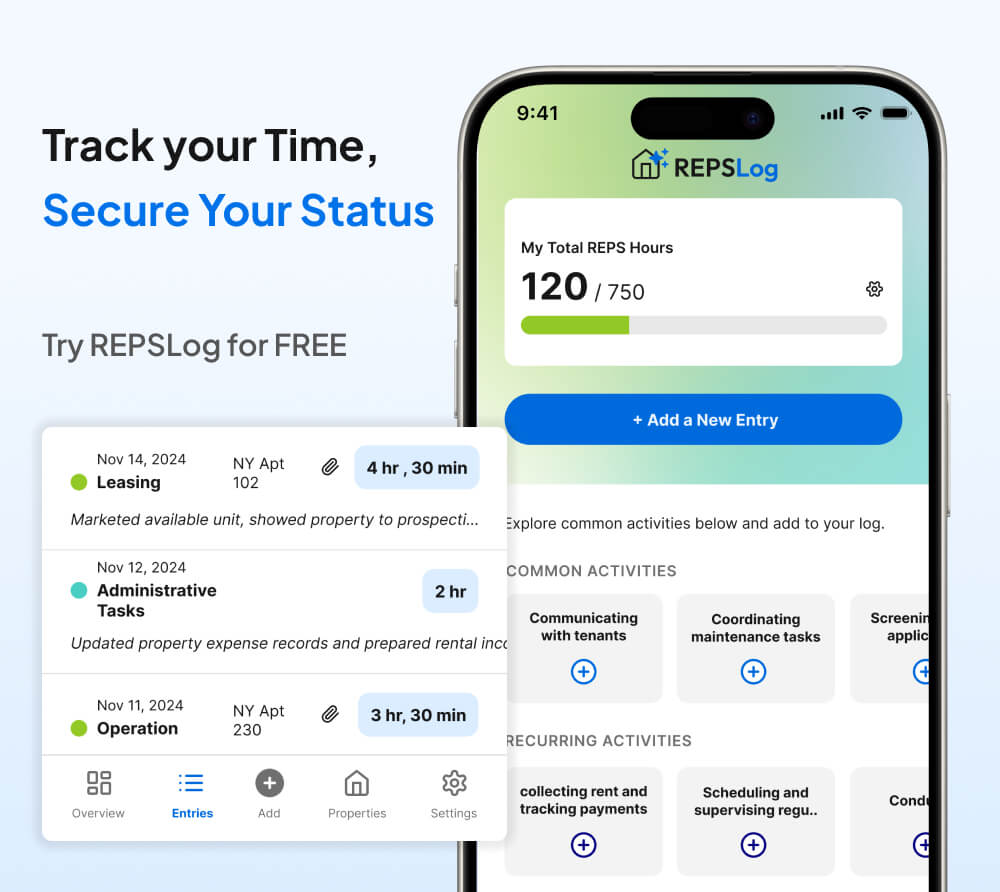
Material participation is activity-based. REPS adds an individual qualification layer on top. In REPSLog you pick the 750, 500 or 100-hour test as your tracking goal and see your progress per year and per property.
What the IRS Evaluates
During an audit, the IRS typically looks for:
- Evidence that services were actually performed
- Regular and continuous involvement across the year, not a burst in December
- Contemporaneous logs, written at or near the time of the work
- Operational decision-making rather than passive monitoring
- For the 100-hour test, a credible comparison with everyone else who worked on the property
The regulations allow you to prove participation “by any reasonable means”, such as appointment books, calendars or narrative summaries. In practice, the Tax Court routinely rejects “ballpark guesstimates” reconstructed at tax time. Material participation is about running the rental activity, not merely owning it.
How REPSLog Helps Track Participation Properly
Tracking hours across multiple properties and several participants can quickly become complicated.
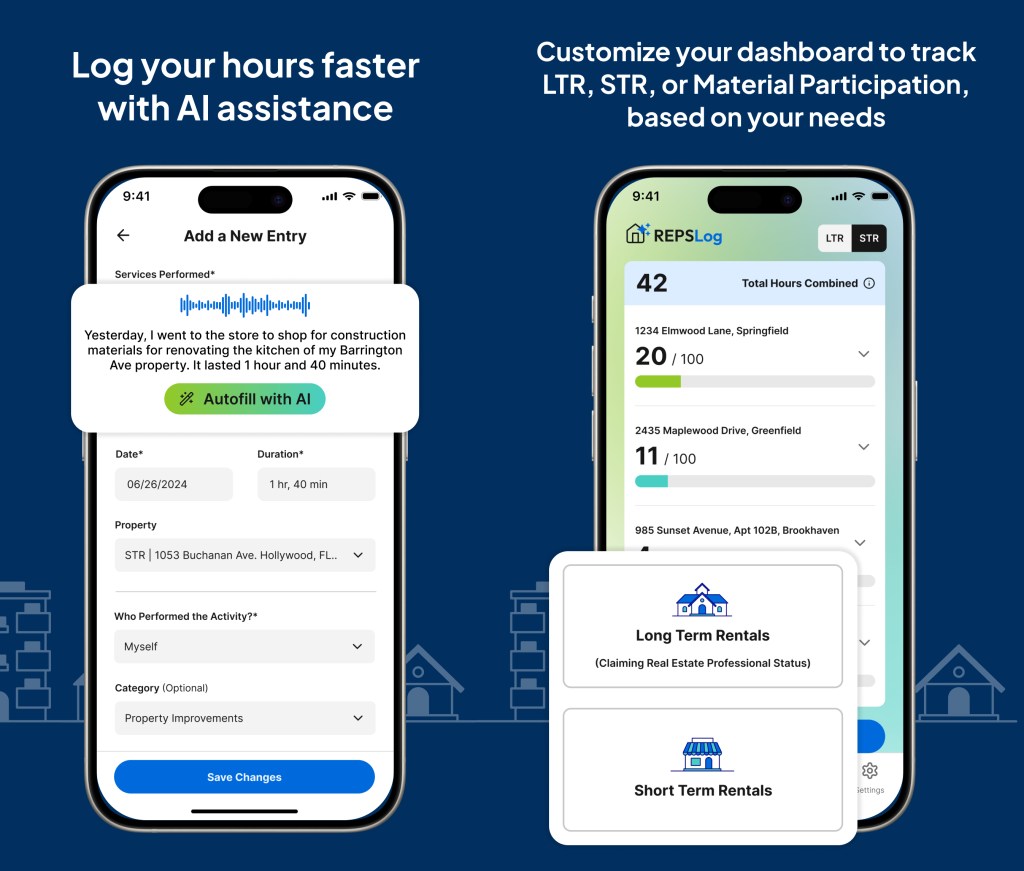
The REPSLog app helps by:
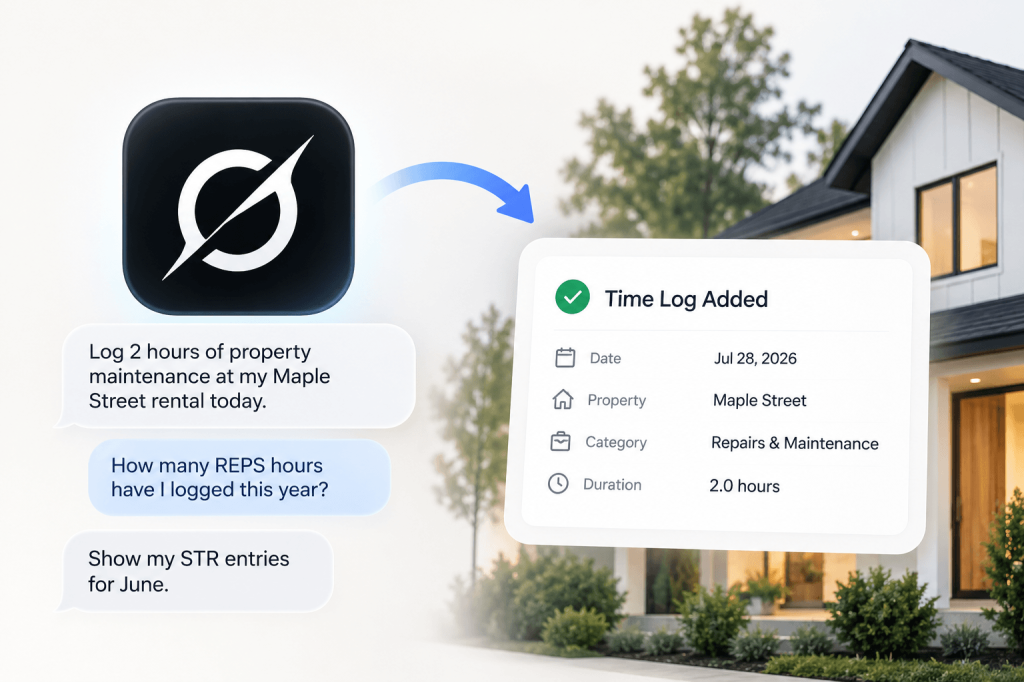
- Logging activities by typing or by voice, with voice logging picking out the duration, property and date as you speak
- Timing on-site work live with the timer
- Turning past calendar events into entries with calendar integration (Google, Microsoft 365 or your device calendar)
- Attaching invoices, receipts and photos to each entry as evidence
- Tracking progress toward the 100-hour, 500-hour or 750-hour thresholds
- Keeping STR and long-term rental properties separate
- Recording other participants so you can show you did more than anyone else
- Exporting a CPA-ready PDF, Excel or CSV with the date and time each entry was created, which shows the log was kept as you went
When material participation depends on whether you did more work than anyone else, clear participant tracking becomes critical.
Frequently Asked “Does This Count?” Questions
Does travel time count toward material participation?
Generally yes, if the travel is directly tied to performing operational services for the rental activity. Courts have discounted long trips where little work was done, so log the purpose and the work performed along with the drive.
Does drive time between properties count?
Yes, when you are traveling to perform services at those properties.
Do emails count toward material participation?
Yes, if they involve tenant management, contractor coordination, or operational decisions. Keep the time realistic; a log full of one-hour entries for single emails invites questions.
Does bookkeeping count toward material participation?
Yes, when it is part of actively managing rental operations. Reviewing statements purely as an owner is investor-type activity and does not count unless you are directly involved in day-to-day management.
Does research count toward material participation?
Generally no, unless it directly results in executing operational actions for your rental activity.
Does overseeing a property manager count?
It can, if you are actively making final operational decisions rather than passively receiving updates. Two cautions: the manager’s hours count as “any other individual” for the 100-hour test, and the facts-and-circumstances test is not available if someone else is paid to manage the property. See qualifying for REPS with a property manager.
Do my spouse’s hours count?
For material participation, yes. Your spouse’s work on the activity counts as yours, even if they are not on the title. For the REPS 750-hour and more-than-half tests, no; one spouse has to meet those alone.
Does acquisition analysis count?
It may count toward the REPS 750 hours if acquisition is part of your ongoing real property business and tied to execution. It generally does not count toward material participation in the rentals you already operate.
Do education and seminars count?
Usually no, unless directly tied to current operational decisions.
For STR, is 100 hours enough?
Often yes, if the average guest stay is 7 days or less, you exceed 100 hours, and no other individual (cleaner, co-host, manager) spent more time on the property than you.
For REPS, what are the hour requirements?
You must perform more than 750 hours in real property trades or businesses in which you materially participate, and those hours must be more than half of your total working time for the year.
Final Takeaway
Material participation is not about labels like “travel” or “email.”
It is about whether you were actively operating the rental activity in a regular, continuous, and substantial way.
When in doubt, ask:
Were you running the rental, or simply observing an investment?
That distinction is what ultimately determines whether your hours qualify.
Please Note: REPSLog is NOT a lawyer or CPA, and this is not legal or financial advice. Please consult a qualified professional for guidance regarding IRS rules and regulations.
Do this in REPSLog
- Booking Calendar Sync (Airbnb, Vrbo and any iCal): pull every Airbnb, Vrbo or other booking into your log and get an entry suggested per stay.
- STR Loophole Tracking: a 100 or 500-hour counter per short-term rental, with hours by participant.
- Participants: log who did each activity, so spouse hours count where allowed and contractor hours stay separate.
Step by step in the Help Center: how to use it. Try REPSLog free for 14 days on iPhone, Android or the web app.