
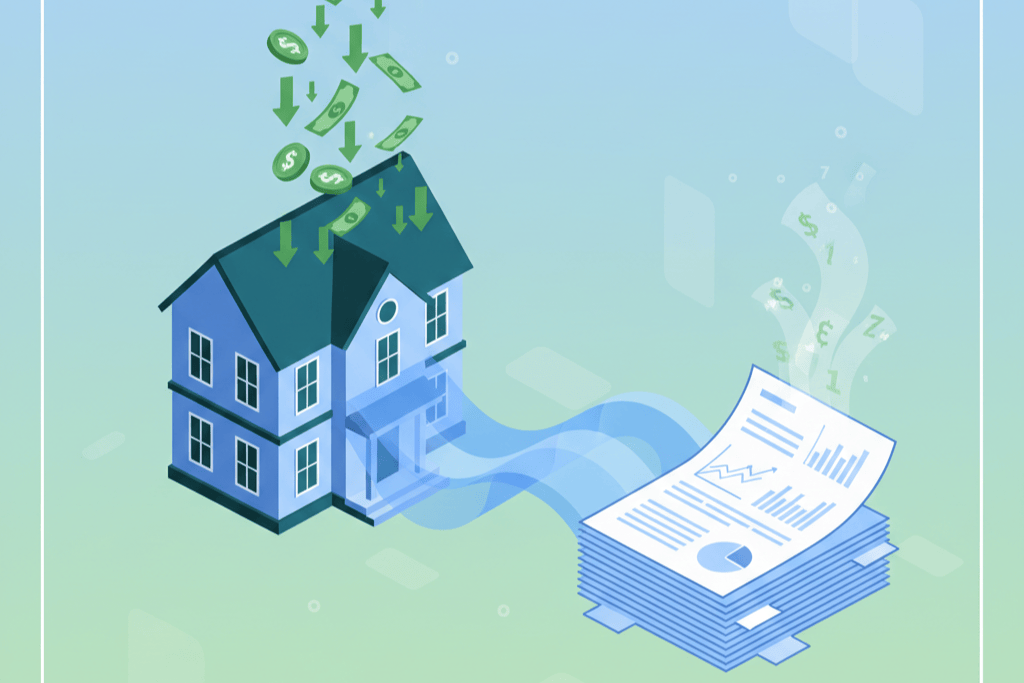
Depreciation is the engine that drives nearly every major tax strategy in real estate investing. It is the reason a cash-flow-positive rental property can show a loss on your tax return. It is the mechanism behind cost segregation, bonus depreciation, and the tax savings that Real Estate Professional Status (REPS) unlocks. And yet, many real estate investors — even experienced ones — do not fully understand how depreciation works, why it matters, or how to maximize it.
This guide breaks down depreciation from the ground up: what it is, how it creates paper losses, how those losses interact with your income, and how REPS transforms depreciation from a deferred benefit into an immediate cash-saving tool.
What Is Depreciation?
Depreciation is a non-cash tax deduction that accounts for the theoretical wear and tear, deterioration, and obsolescence of a physical asset over time. The IRS recognizes that buildings and their components do not last forever, so it allows property owners to deduct a portion of the building’s cost each year over its useful life.
The critical word in that definition is “non-cash.” Unlike mortgage interest, property taxes, insurance, or repairs — which all require you to write a check — depreciation is a deduction you claim without spending any additional money. You already spent the money when you purchased the property. Depreciation lets you deduct that purchase price over time.
What You Can and Cannot Depreciate
Depreciable:
- The building structure (walls, roof, foundation, built-in systems)
- Building components (HVAC, plumbing, electrical, flooring)
- Fixtures and appliances
- Land improvements (driveways, fencing, landscaping)
Not depreciable:
- Land (land does not wear out or become obsolete)
- Personal residence (only investment or business property qualifies)
- Property not placed in service (under construction but not yet rented)
When you purchase a rental property, the purchase price must be allocated between the building (depreciable) and the land (not depreciable). This allocation is typically based on the county tax assessor’s breakdown, an appraisal, or another reasonable method.

The Standard Depreciation Schedules
The IRS prescribes specific recovery periods for different types of property:
Residential Rental Property: 27.5 Years
Any building where 80% or more of gross rental income comes from dwelling units. This includes single-family homes, duplexes, apartments, condos, and townhomes used as rentals.
Annual depreciation: Building basis divided by 27.5 Example: A building worth $550,000 generates $20,000 in annual depreciation ($550,000 / 27.5)
Non-Residential (Commercial) Property: 39 Years
Office buildings, retail centers, warehouses, and other commercial structures.
Annual depreciation: Building basis divided by 39 Example: A commercial building worth $780,000 generates $20,000 in annual depreciation ($780,000 / 39)
Land Improvements: 15 Years
Driveways, parking lots, sidewalks, fencing, landscaping, pools, and other improvements to the land (as opposed to the building).
Personal Property Within the Building: 5 or 7 Years
Appliances, carpeting, furniture, window treatments, and similar items. These shorter recovery periods are identified through a cost segregation study (discussed below).
How Depreciation Creates a Paper Loss
Here is where the magic happens. Let us walk through a concrete example.
A Cash-Flow-Positive Property That Shows a Tax Loss
You own a residential rental property with the following annual financials:
| Item | Amount |
|---|---|
| Rental income | $36,000 |
| Mortgage interest | ($12,000) |
| Property taxes | ($4,800) |
| Insurance | ($2,400) |
| Maintenance and repairs | ($3,600) |
| Property management | ($3,600) |
| Net cash flow (before depreciation) | $9,600 |
| Depreciation ($550,000 basis / 27.5 years) | ($20,000) |
| Net taxable income (loss) | ($10,400) |
Your property generates $9,600 in positive cash flow — money in your pocket. But on your tax return, after depreciation, it shows a $10,400 loss. You received $9,600 in cash AND you have a $10,400 tax deduction.
This is what “paper loss” means. The loss exists on paper (your tax return) but not in reality (your bank account). Depreciation creates a deduction for an expense you are not currently paying.
The Scale Effect Across a Portfolio
The power of depreciation multiplies across a portfolio. An investor with five properties, each generating $20,000 in annual depreciation, has $100,000 in depreciation deductions. If each property is cash-flow positive by $10,000, the investor receives $50,000 in cash while showing a $50,000 paper loss on their tax return.
What Happens to Paper Losses?
The tax treatment of your paper losses depends on your classification under the passive activity rules:
Without REPS: Losses Are Passive
For most taxpayers, rental activity is passive under IRC Section 469. Passive losses can only offset passive income. If you do not have enough passive income to absorb your rental losses, the excess is suspended and carried forward to future years.
There is a limited exception: taxpayers with modified adjusted gross income under $100,000 who actively participate in their rental activities can deduct up to $25,000 in rental losses against non-passive income. This allowance phases out between $100,000 and $150,000 MAGI, disappearing entirely at $150,000.
For investors with incomes above $150,000 — which includes most people pursuing depreciation-heavy strategies — this exception provides no benefit. Their paper losses sit suspended until they generate passive income or sell the property.
With REPS: Losses Are Non-Passive
When you qualify as a real estate professional (more than 750 hours in real property trades or businesses, more than half of your total professional hours in real estate, and material participation in your rental activities), the losses are reclassified as non-passive. They can offset any income:
- W-2 wages
- Business income (self-employment, partnerships)
- Capital gains
- Interest and dividends
- Retirement account distributions
- Any other taxable income
This is why REPS is so valuable. It is not creating new deductions — your depreciation is the same regardless of your status. REPS is removing the barrier that prevents you from using those deductions immediately.
Accelerating Depreciation: Cost Segregation
Standard depreciation spreads the building’s cost over 27.5 or 39 years. Cost segregation accelerates this timeline by reclassifying building components into shorter recovery periods.
A cost segregation study, conducted by an engineering firm, identifies components within your building that qualify for 5-year, 7-year, or 15-year depreciation instead of the standard schedule. Typical reclassifications include:
- 5-year property: Appliances, carpeting, decorative lighting, window treatments, certain electrical and plumbing
- 7-year property: Furniture, fixtures, office equipment
- 15-year property: Parking lots, driveways, landscaping, fencing, pools
The Impact of Cost Segregation
Using the same $550,000 building from our earlier example, assume a cost segregation study reclassifies 30% of the basis:
- $82,500 in 5-year property (annual depreciation: ~$16,500 in Year 1)
- $27,500 in 7-year property (annual depreciation: ~$3,929 in Year 1)
- $55,000 in 15-year property (annual depreciation: ~$3,667 in Year 1)
- $385,000 in 27.5-year property (annual depreciation: ~$14,000)
Total Year 1 depreciation: approximately $38,000 versus $20,000 under standard depreciation.
The additional $18,000 in first-year depreciation creates a larger paper loss. For a REPS-qualifying investor in the 37% bracket, that additional depreciation saves roughly $6,660 in federal taxes.
Bonus Depreciation: Even More Acceleration
Bonus depreciation under IRC Section 168(k) allows a percentage of the cost of qualifying short-lived assets to be deducted in the first year. In 2026, the bonus depreciation rate is 20% (down from 100% in 2022, phasing down annually).
Applying 20% bonus depreciation to the cost-segregated components from our example adds even more first-year acceleration. Combined with cost segregation, bonus depreciation, and REPS, the first-year paper loss from a single property can be enormous relative to the actual cash invested.
Depreciation Recapture: The Other Side of the Coin
Depreciation is not a permanent tax elimination — it is a tax timing strategy. When you sell a property, the IRS “recaptures” the depreciation you claimed through special tax rates:
Section 1250 Recapture (Real Property)
Depreciation claimed on the building structure (27.5-year or 39-year property) is recaptured at a maximum rate of 25%. This is higher than the long-term capital gains rate of 15-20% but lower than the top ordinary income rate of 37%.
Section 1245 Recapture (Personal Property)
Depreciation claimed on personal property (5-year and 7-year assets identified through cost segregation) is recaptured at ordinary income rates (up to 37%).
Why Recapture Is Not a Dealbreaker
Despite recapture, depreciation is almost always beneficial because of the time value of money:
- Immediate savings vs. future liability: Taking a $20,000 deduction today at 37% saves $7,400 now. Paying 25% recapture years later on $20,000 costs $5,000 in the future. The present value of the future cost is less than the immediate savings.
- 1031 exchange deferral: If you exchange into another property under Section 1031, recapture is deferred. Serial 1031 exchanges can defer recapture indefinitely.
- Stepped-up basis at death: Under current law (IRC Section 1014), heirs receive a stepped-up basis equal to fair market value at the date of death. All deferred gains and deferred depreciation recapture are effectively eliminated.
The Complete Picture: Depreciation, REPS, and Your Tax Return
Let us put everything together with a comprehensive example.
Investor Profile
- $350,000 W-2 income (married filing jointly)
- 3 residential rental properties
- Total building basis: $1,650,000
- Cost segregation completed on all properties
- Qualifies for REPS through a spouse who manages properties full-time
Annual Tax Impact
| Component | Amount |
|---|---|
| Standard depreciation (27.5-year components) | ($42,000) |
| Accelerated depreciation (5, 7, 15-year components) | ($35,000) |
| Net rental operating income (after all cash expenses) | $28,000 |
| Net rental loss (paper loss) | ($49,000) |
Without REPS:
- $49,000 loss is passive and suspended
- Taxable income remains $350,000
- Federal tax: approximately $70,000
With REPS:
- $49,000 loss offsets W-2 income
- Taxable income reduced to $301,000
- Federal tax: approximately $52,000
- Annual tax savings: approximately $18,000
Over 10 years, that is roughly $180,000 in cumulative tax savings — from depreciation alone, on properties that are also generating positive cash flow.
Frequently Asked Questions
Does depreciation reduce the value of my property?
No. Depreciation is a tax concept, not a market concept. Your property’s market value is determined by supply and demand, not by how much depreciation you have claimed. Many properties appreciate in value while generating depreciation deductions.
What happens if my rental property is at a net profit even after depreciation?
If rental income exceeds all expenses including depreciation, you have a net profit from the rental activity. This is taxable income regardless of your REPS status. REPS is only relevant when you have a net loss — it determines whether that loss is passive (suspended) or non-passive (immediately usable).
Can I choose not to take depreciation?
Technically, you can decline to claim depreciation. However, the IRS treats depreciation as “allowed or allowable,” meaning that even if you do not claim it, the IRS assumes you did for purposes of calculating gain on sale and depreciation recapture. Not claiming depreciation costs you the annual deduction without saving you from recapture. There is virtually never a reason to skip depreciation.
How do I determine the depreciable basis of my property?
The depreciable basis is generally your purchase price plus closing costs, minus the value of the land. Land allocation can be based on county tax assessor records, an independent appraisal, or other reasonable methods. Your CPA should help establish this allocation at the time of purchase.
Does depreciation apply to short-term rental properties?
Yes. Whether a property is rented long-term (12-month leases) or short-term (nightly on Airbnb), the building and its components are depreciable. Short-term rentals often generate even more depreciation due to higher levels of personal property (furniture, appliances, decor) that qualify for shorter recovery periods.
What is the difference between depreciation and a Section 179 deduction?
Section 179 allows immediate expensing of qualifying property in the year it is placed in service, up to annual limits. Standard depreciation spreads the deduction over the asset’s recovery period. Bonus depreciation allows a percentage to be taken in Year 1 with the remainder depreciated normally. All three mechanisms reduce taxable income through deductions related to the cost of property.
Can I depreciate improvements I make to a rental property?
Yes. Improvements increase the depreciable basis of the property. They are depreciated separately from the original building, starting a new recovery period when placed in service. Improvements may also qualify for cost segregation and bonus depreciation.
Key Takeaways
- Depreciation is a non-cash deduction that creates paper losses on properties that are cash-flow positive
- Standard depreciation spreads the deduction over 27.5 years (residential) or 39 years (commercial)
- Cost segregation accelerates depreciation by reclassifying components into 5, 7, and 15-year recovery periods
- Without REPS, paper losses are passive and generally suspended for investors above $150,000 MAGI
- With REPS, paper losses are non-passive and immediately offset W-2 wages, business income, and all other income
- Depreciation recapture occurs upon sale but is mitigated by time value of money, 1031 exchanges, and stepped-up basis at death
- Bonus depreciation at 20% in 2026 further accelerates first-year deductions on cost-segregated components
How REPSLog Protects the Depreciation Strategy You Have Built
Depreciation creates the savings. Cost segregation amplifies them. REPS unlocks them. But the entire structure depends on proving you qualify as a real estate professional — and that means documenting more than 750 hours of qualifying activity, passing the more-than-half test, and demonstrating material participation.
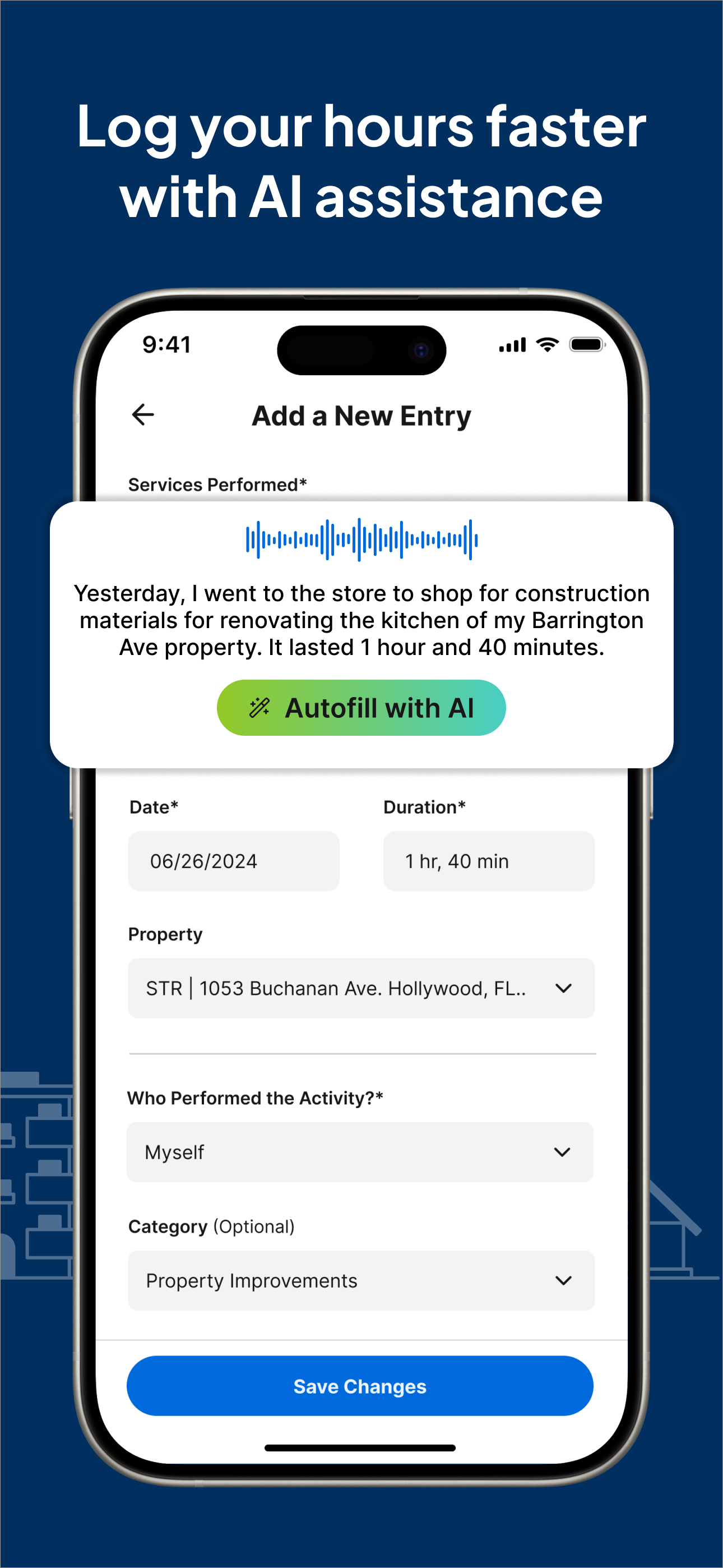
REPSLog is the documentation tool that protects your investment in depreciation strategy. Log your real estate activities from your phone in seconds. See your year-to-date hours at a glance. Export detailed reports for your CPA that tie directly to the REPS tests the IRS evaluates.
You have invested in properties, cost segregation studies, and professional tax planning. Do not let inadequate documentation be the weak link.
Available on iOS and Android, or on the web at app.reps-log.com. Start tracking your hours free →
This article is for educational purposes only and does not constitute tax or legal advice. Consult a qualified tax professional for guidance tailored to your situation.


 REPSLog Blog