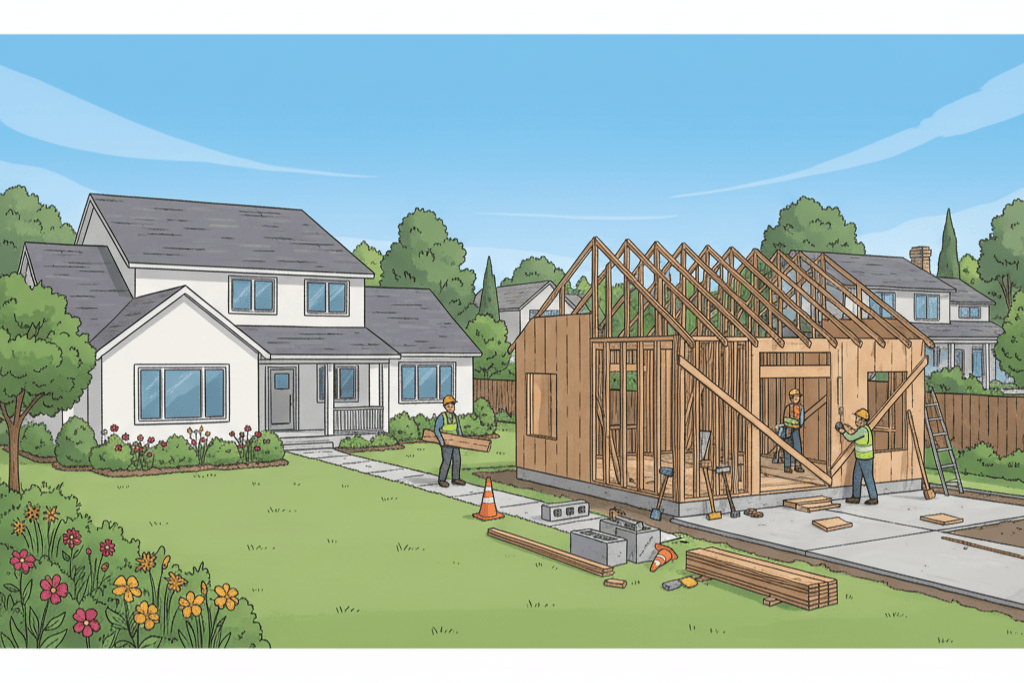
Accessory dwelling units — ADUs — have become one of the hottest development strategies in residential real estate. State and local governments across the country have relaxed zoning restrictions, streamlined permitting, and even created financial incentives to encourage ADU construction. For homeowners and investors, ADUs offer a way to add rental income to existing properties. For REPS taxpayers, ADUs offer something equally valuable: a legitimate, concentrated source of qualifying hours that can make or break a qualification year.
Building an ADU is a development activity in every sense of the word. It involves planning, designing, permitting, constructing, and ultimately converting a new structure into a rental unit. Every one of those phases generates hours that count toward the more than 750 hours threshold and the more-than-half test. An ADU project can add 300 to 600 qualifying hours to your annual total in a single year, transforming a borderline REPS case into a comfortable one.
Why ADUs Are Particularly Valuable for REPS
ADU development sits at the intersection of multiple qualifying categories under IRC Section 469(c)(7)(C):
- Development: Planning, feasibility analysis, site design, and entitlement
- Construction: Building the new unit, whether ground-up, garage conversion, or interior conversion
- Management: Overseeing the project, coordinating with architects and contractors, managing the budget
- Conversion: Transforming an existing structure (a garage, basement, or portion of a home) into a habitable rental unit
- Rental: Marketing and leasing the completed ADU
This multi-category involvement demonstrates the breadth of your real property trade or business activities — a factor that strengthens the credibility of your REPS claim in an audit.
Additionally, ADU development creates natural documentation: permits, plans, invoices, inspection records, and photographs. These corroborating records support your activity log with independent, timestamped evidence that the work was actually performed.
Phase 1: Planning and Feasibility (50-100 Hours)
Before you hire an architect or apply for a permit, significant planning work goes into an ADU project. All of this time counts.
Feasibility Research
- Researching your local ADU regulations (setback requirements, height limits, lot coverage restrictions, owner-occupancy requirements)
- Reviewing your property’s zoning classification and any deed restrictions
- Investigating utility capacity (sewer, water, electrical) for an additional unit
- Analyzing whether your lot can physically accommodate an ADU
Financial Analysis
- Estimating construction costs based on local market data
- Projecting rental income for the completed ADU
- Running return-on-investment calculations
- Comparing ADU options (garage conversion vs. detached new construction vs. internal conversion)
- Consulting with lenders about construction financing or HELOCs
Design Concept
- Sketching layout options or reviewing concept designs
- Meeting with architects or designers for initial consultations
- Evaluating pre-designed ADU plans from manufacturers or plan services
- Selecting the ADU type and approximate size based on zoning and financial analysis
Example Log Entries
- “Researched [City] ADU ordinance requirements — reviewed setback, height, and parking regulations for my lot at 555 Pine Dr. Measured potential ADU footprint in backyard. 2.5 hours.”
- “Created financial model for detached ADU at 555 Pine Dr. Estimated $180K construction cost, $1,800/month rental income, projected 8.2% cash-on-cash return. 2 hours.”
- “Met with ADU architect for initial consultation. Reviewed three layout options for 650 sq ft detached unit. Discussed permitting timeline and design fees. 1.5 hours.”
Phase 2: Design and Permitting (60-120 Hours)
Once you decide to proceed, the design and permitting phase generates substantial hours through detailed decision-making and regulatory navigation.
Architectural Design
- Reviewing and providing feedback on architectural drawings (schematic design, design development, construction documents)
- Making decisions on floor plan layout, window placement, and exterior materials
- Reviewing structural engineering reports
- Selecting finishes, fixtures, and appliances appropriate for a rental unit
- Coordinating with the architect on plan revisions
Permitting
- Preparing and submitting the building permit application
- Responding to plan check comments and correction requests from the building department
- Attending meetings with planning staff or planning commission hearings
- Coordinating with utility companies for service connections (electrical panel upgrade, sewer lateral, water meter)
- Scheduling and attending pre-construction inspections
HOA and Neighbor Coordination
- If applicable, submitting plans to your HOA architectural review committee
- Attending HOA meetings to present and defend your ADU plans
- Communicating with neighbors about the project (some jurisdictions require neighbor notification)
Example Log Entries
- “Reviewed third draft of ADU construction documents from architect. Provided comments on kitchen layout, bathroom fixture placement, and exterior material selections. Approved documents for permit submission. 3 hours.”
- “Submitted building permit application for ADU at 555 Pine Dr. Completed application forms, uploaded plans and engineering documents, paid permit fees. 2 hours.”
- “Met with building department plan checker to discuss correction items on ADU permit application. Three items needed revision — structural header sizing, egress window dimensions, and smoke detector placement. Coordinated with architect on corrections. 2 hours.”
Phase 3: Construction (150-300 Hours)
The construction phase is the most hour-intensive, especially if you manage the project yourself rather than hiring a general contractor.
If You Self-Manage (Acting as Owner-Builder)
Self-managing an ADU construction project can generate 200 to 300+ hours:
- Hiring and coordinating subcontractors (foundation, framing, plumbing, electrical, HVAC, roofing, drywall, painting, flooring)
- Scheduling trade sequences and managing the project timeline
- Ordering and coordinating material deliveries
- Visiting the site daily or multiple times per week to inspect progress
- Resolving construction issues and making on-the-spot decisions
- Managing the construction budget and processing invoices
- Scheduling required inspections (foundation, framing, rough-in, insulation, final)
- Being present for inspections and addressing any failed items
- Performing hands-on work yourself (painting, landscaping, cleanup)
If You Hire a General Contractor
Even with a GC, you remain actively involved:
- Selecting and vetting the GC (soliciting bids, checking references, reviewing contracts)
- Weekly progress meetings with the GC
- Making design decisions as they arise during construction
- Reviewing and approving change orders
- Inspecting work at major milestones
- Managing the draw schedule (releasing payments tied to construction milestones)
- Communicating with the GC about timeline, quality, and budget issues
- Attending required inspections
GC-managed projects typically generate 100 to 200 owner hours depending on the level of your involvement.
Hands-On Labor
If you perform any of the construction work yourself — painting, flooring installation, landscaping, trim work — every hour of physical labor counts as well.
Example Log Entries
- “Site meeting with framing crew at ADU project, 555 Pine Dr. Reviewed window rough opening dimensions, confirmed header sizing, and discussed timeline for sheathing and roofing. Inspected foundation work completed last week. 2 hours on site plus 40 min travel.”
- “Met plumbing inspector for rough-in inspection at ADU. Inspection passed. Coordinated with electrician to schedule rough-in next week. Reviewed drywall delivery schedule with supplier. 1.5 hours.”
- “Personally painted interior of ADU — primer coat on all walls and ceilings. 6 hours.”
Phase 4: Conversion to Rental (30-60 Hours)
Once construction is complete, converting the ADU from a construction project to an income-producing rental generates additional qualifying hours.
Final Preparation
- Final cleaning and punch list completion
- Installing appliances and fixtures
- Setting up utilities in the ADU’s name (if separately metered)
- Arranging for a final occupancy inspection and obtaining the certificate of occupancy
- Taking professional photos for rental listings
- Setting up property management systems (separate accounting, maintenance tracking)
Leasing
- Researching comparable rents in your market
- Creating and posting rental listings
- Showing the ADU to prospective tenants
- Screening applicants
- Drafting and executing the lease
- Conducting the move-in inspection
Example Log Entries
- “Received certificate of occupancy for ADU at 555 Pine Dr. Set up separate utility accounts for gas and electric. Created Zillow listing with professional photos. 3 hours.”
- “Showed ADU to four prospective tenants. Collected three applications, ran credit and background checks on all three. 3.5 hours.”
Phase 5: Ongoing Management (50-150 Hours/Year)
After the ADU is rented, it becomes an ongoing source of qualifying management hours:
- Tenant communication and maintenance coordination
- Rent collection and bookkeeping
- Property inspections
- Lease renewals
- Ongoing landscaping and exterior maintenance
- Managing the relationship between main house tenants/owners and ADU tenants
If the ADU is on a property you also own and rent (the main house), both properties’ management hours count toward REPS. If the ADU is on your primary residence, only the ADU management hours count (hours on your personal residence do not qualify).
ADU-Specific REPS Considerations
Owner-Occupancy Requirements
Many jurisdictions require the property owner to live on the premises (either in the main house or the ADU) to build or maintain an ADU. This creates a mixed-use situation: you live on the property (personal use) and rent part of it (rental activity). Only hours spent on the rental ADU count toward REPS. Hours maintaining your personal living space do not.
Shared Expenses
Property taxes, insurance, and utility costs may need to be allocated between the personal residence and the ADU. The allocation method (typically by square footage) should be consistent and documented.
ADU as a Short-Term Rental
Some investors operate their ADU as a short-term rental (Airbnb, VRBO). STR operations generate significantly more management hours than long-term rentals — guest communication, turnover cleaning coordination, pricing optimization, and booking management. These are all qualifying REPS hours. Be mindful of Section 280A personal-use limitations if you occasionally use the ADU yourself.
Multiple ADU Projects
Investors who build ADUs across multiple properties — or who develop ADUs as a business — can generate substantial qualifying hours. Each project contributes its own development, construction, and management hours to your annual total. Serial ADU development is one of the most effective ways to sustain REPS qualification year after year.

Key Takeaways
- ADU development spans multiple qualifying categories — development, construction, conversion, management, and leasing — strengthening the credibility of your REPS claim.
- A single ADU project can generate 300 to 600 qualifying hours depending on your level of involvement, from planning through construction to leasing.
- Self-managing the construction generates the most hours. Even with a general contractor, active oversight produces 100 to 200 hours.
- ADU projects create natural documentation — permits, plans, inspection records, and invoices that corroborate your activity log.
- Ongoing ADU management adds qualifying hours every year after completion, supporting sustained REPS qualification.
- Owner-occupancy requirements create mixed-use situations. Only hours on the rental ADU count toward REPS, not personal residence maintenance.
Frequently Asked Questions
Do hours planning an ADU count toward REPS even before construction starts?
Yes. Planning, feasibility analysis, financial modeling, zoning research, and architect consultations are all qualifying real property trade or business activities under the development and management categories. Every hour spent on a legitimate ADU planning effort counts, even if you ultimately decide not to build.
Can I count ADU construction hours if I hire a general contractor?
Yes, for the hours you personally spend on the project. Your time selecting the contractor, reviewing bids, attending site meetings, making design decisions, inspecting work, managing the budget, and coordinating with the building department all count. The contractor’s labor hours do not count toward your REPS total.
Does the ADU need to be rented for the development hours to count toward REPS?
No. The qualifying categories include development, construction, and conversion, which occur before any rental income is generated. Hours spent developing and building the ADU count toward REPS during the construction phase itself. You do not need to wait until the unit is rented to claim these hours.
How do I handle hours for an ADU on my primary residence?
Hours spent specifically on the ADU — its design, construction, management, and leasing — count toward REPS. Hours spent on your primary residence (the main house where you live) do not count. Shared expenses and time on shared elements (driveway, yard, exterior) should be allocated between personal and rental use.
Can an ADU project help me qualify for REPS in my first year of investing?
Absolutely. An ADU project is one of the best first-year strategies because it generates concentrated hours across multiple qualifying categories. Combined with property acquisition hours and ongoing management of the completed unit, a single ADU project can propel a first-year investor past the 750-hour threshold.
What if my city requires owner-occupancy but I want to rent both the main house and the ADU?
Owner-occupancy requirements vary by jurisdiction. Some cities require you to live on the property to build the ADU but not to maintain it. Others impose ongoing occupancy requirements. Check your local regulations. If you must live on-site, only the ADU rental activity generates REPS-qualifying hours. If you eventually move out and rent both units (where permitted), all management hours across both units count.
Should I make the grouping election under Treas. Reg. 1.469-9(g) to include my ADU with other rental properties?
If you own multiple rental properties, the grouping election allows you to treat all of them (including the ADU) as a single activity for material participation purposes. This is generally beneficial because it lets you combine hours from all properties to demonstrate more than 500 hours of material participation across the group, rather than proving it separately for the ADU and each other property.
Disclaimer: This article is for educational purposes only and does not constitute tax, legal, or financial advice. Tax laws, zoning regulations, and ADU requirements are complex and vary by jurisdiction. Consult a qualified tax professional and local zoning expert before making any decisions related to ADU development or Real Estate Professional Status.
Track Your ADU Development Hours from Day One
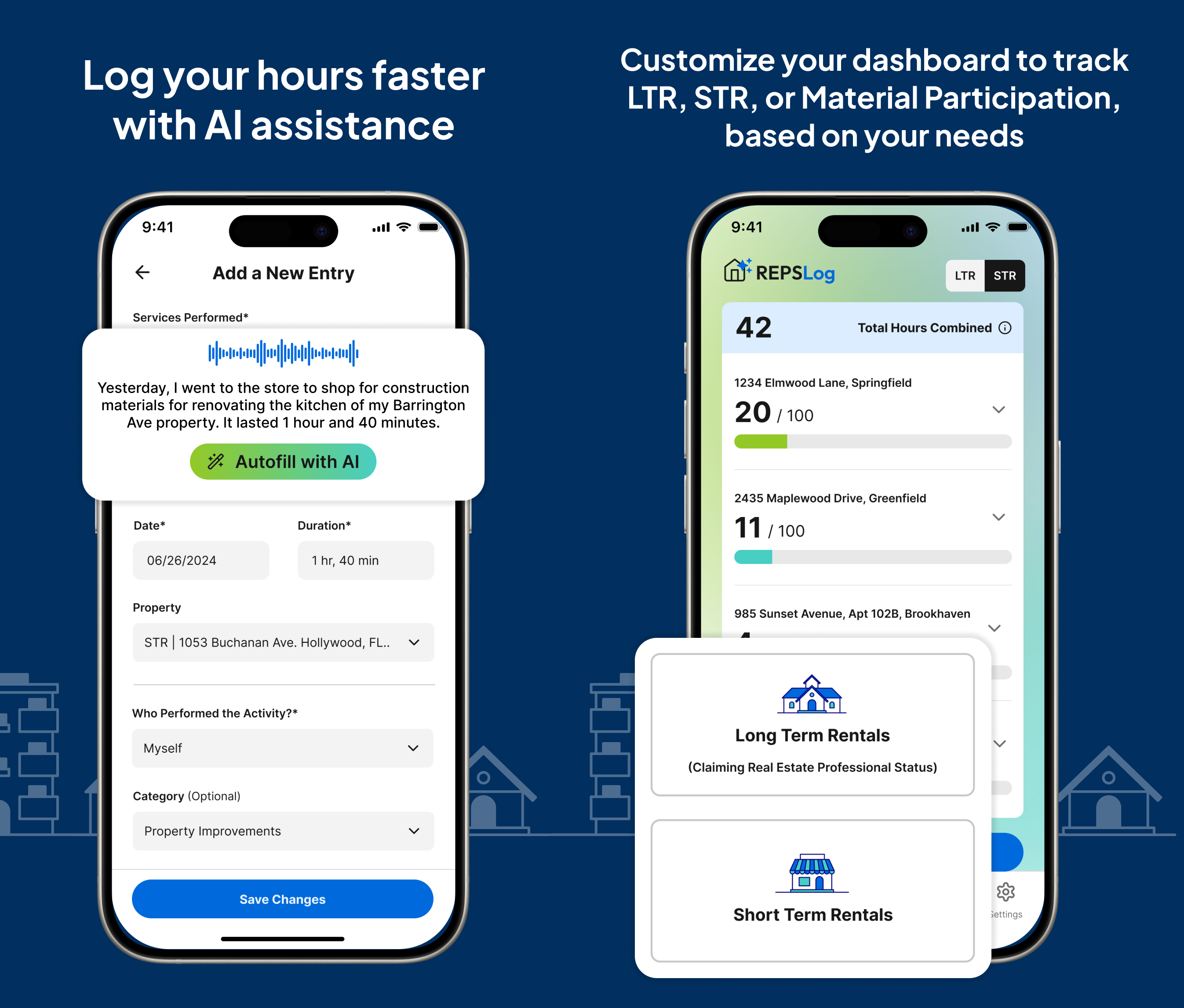
From feasibility research to tenant move-in, every phase of ADU development generates qualifying REPS hours. REPSLog helps you log each activity with the right property, category, and description — building the audit-ready documentation that supports your REPS claim.
Available on iOS | Android | Web