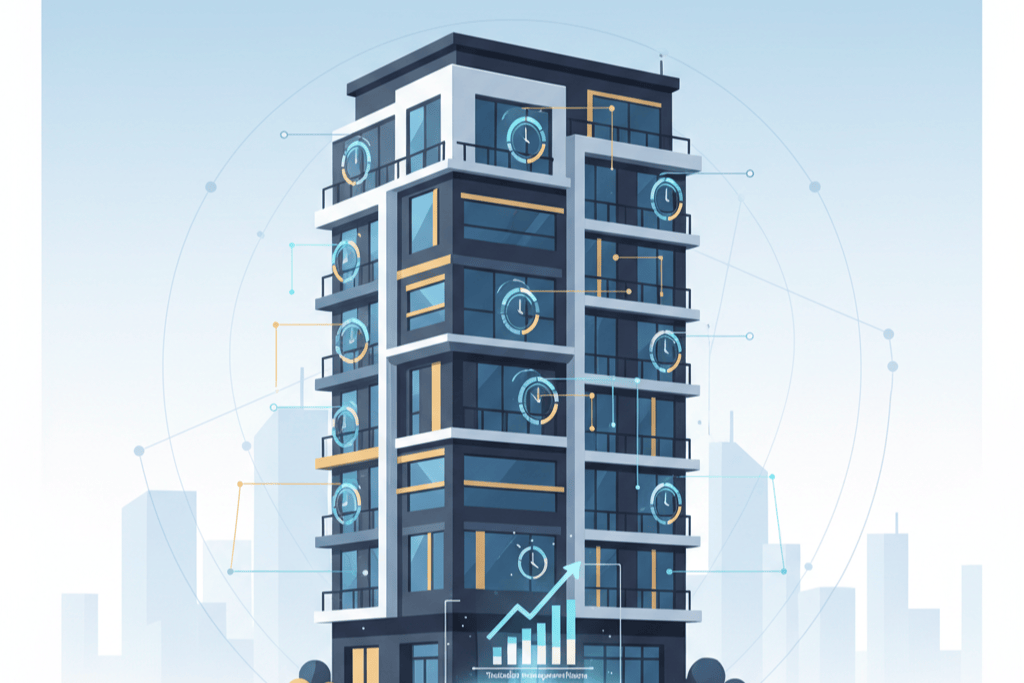
Multifamily properties are the natural complement to a REPS strategy. A single-family rental might generate 100 to 200 management hours per year. A four-unit building can generate 300 to 500. A 20-unit apartment complex can easily produce 600 or more. The math is straightforward: more units mean more tenants, more maintenance, more leasing activity, and more management hours. For investors pursuing Real Estate Professional Status, multifamily properties provide the scale needed to comfortably exceed the more than 750 hours threshold while building a portfolio that generates meaningful depreciation losses.
But scaling from single-family homes to multifamily investing changes more than just the hour count. The complexity of the management, the sophistication of the financing, and the nature of the tax benefits all evolve. This guide explores how multifamily investing interacts with REPS, how the grouping election amplifies the benefits, and how to structure a multifamily portfolio for maximum REPS advantage.
Why Multifamily Generates More Qualifying Hours
The relationship between unit count and management hours is not perfectly linear, but it is strongly correlated. Each additional unit brings:
More Tenant Interactions
Every tenant relationship requires communication, lease management, and periodic attention. Multiply these interactions by 10 or 20 or 50 units, and the tenant management category alone can produce hundreds of hours. Lease renewals, rent collection, maintenance requests, move-in/move-out inspections, and dispute resolution all scale with unit count.
More Maintenance and Repair Activity
A 20-unit apartment building has 20 kitchens, 20 (or more) bathrooms, 20 sets of appliances, 20 HVAC systems (or a centralized system serving 20 units), and extensive common areas. The maintenance burden is proportionally larger. Coordinating vendors, scheduling repairs, inspecting work, and handling emergency maintenance all generate qualifying hours.
More Turnover and Leasing
Tenant turnover is the most time-intensive recurring activity in property management. Each turnover involves inspection, repair, cleaning, marketing, showing, screening, and leasing. With a larger number of units, turnover events occur more frequently throughout the year, providing a steady stream of qualifying hours.
More Administrative Work
Bookkeeping, financial reporting, insurance management, vendor management, and compliance activities all increase with portfolio size. A 20-unit building generates more complex financial records than a single-family rental, and managing those records is qualifying management activity.
Common Area Management
Multifamily properties have shared spaces — lobbies, hallways, parking lots, laundry facilities, landscaping, trash areas — that require ongoing management and maintenance. These common area hours have no equivalent in single-family rental ownership.

The Grouping Election: A Multifamily Investor’s Best Friend
The grouping election under Treas. Reg. 1.469-9(g) allows a REPS taxpayer to treat all rental real estate activities as a single activity for material participation purposes. For multifamily investors, this election is virtually essential.
Without the Grouping Election
If you own three multifamily properties, you must demonstrate material participation in each one separately. The most common test requires more than 500 hours per property. For three properties, that is 1,500+ hours divided across three separate activities, each needing independent documentation.
Or you must meet one of the other material participation tests (more than 100 hours with no one participating more, substantially all participation, etc.) for each property individually. This property-by-property analysis is burdensome and creates risk — if you fall short on even one property, the losses from that property remain passive.
With the Grouping Election
All rental activities become a single activity. Your combined hours across all properties count toward a single material participation test. If you spend 200 hours on Property A, 250 hours on Property B, and 200 hours on Property C, your total is 650 hours — comfortably above the 500-hour test for the grouped activity.
This simplification is particularly valuable as your portfolio grows. Adding a new property does not create a new material participation burden — it simply adds its hours to the group.
Making the Election
The grouping election is made by attaching a statement to your tax return in the first year you use it. The statement identifies all rental activities being grouped and the basis for the grouping. Once made, the election is generally binding for future years, although new properties can be added to the group.
Discuss the timing and language of the grouping election with your CPA. If you are in your first year of REPS qualification, making the election with your first REPS return is the standard approach.
Spousal Hours in a Grouped Activity
For material participation in the grouped activity, spouses filing jointly can combine their hours under IRC 469(h)(5). If one spouse handles tenant relations and the other manages maintenance and renovations, their combined hours count toward the 500-hour material participation test for the entire grouped portfolio.
This is an important distinction from REPS qualification, where only one spouse needs to qualify and must do so independently. The grouping election plus spousal hour combination for material participation creates a powerful framework for married couples.
Multifamily Depreciation and REPS: Where the Real Savings Are
The tax power of REPS is not in the rental income — it is in the depreciation. Multifamily properties, especially when combined with cost segregation, generate enormous paper losses that REPS converts from suspended passive losses into active deductions against W-2 and business income.
Standard Depreciation
A residential multifamily building is depreciated over 27.5 years (straight-line). A $2 million building (excluding land) generates approximately $72,700 per year in depreciation. With REPS and material participation, this entire amount offsets non-rental income.
Cost Segregation
A cost segregation study reclassifies building components into shorter-lived asset categories:
- 5-year property: Carpeting, certain appliances, and decorative fixtures
- 7-year property: Certain office equipment and specialized fixtures
- 15-year property: Land improvements (parking lots, sidewalks, landscaping)
With bonus depreciation, short-lived components can be fully depreciated in the year of purchase. A $2 million multifamily building might have $600,000 in components eligible for accelerated depreciation, generating a $600,000 first-year deduction instead of $72,700.
For a REPS investor in the 37% tax bracket, that additional first-year deduction of approximately $527,300 ($600,000 minus the $72,700 that would have been taken anyway) saves roughly $195,000 in federal taxes in the acquisition year. Without REPS, that loss is passive and likely suspended.
Scaling Depreciation Across Multiple Properties
The beauty of multifamily portfolios for REPS taxpayers is that depreciation scales with acquisitions. Each new property added to the portfolio generates its own depreciation stream. An investor who acquires one multifamily building per year accumulates depreciation deductions that can offset substantial W-2 or business income for years.
The grouping election ensures that material participation across the entire portfolio is straightforward, and REPS qualification (maintained annually) keeps all of these losses non-passive.
Portfolio Construction for REPS Optimization
Strategy 1: Start Small and Scale
Many REPS investors begin with duplexes, triplexes, and fourplexes — small enough to finance with residential mortgages but large enough to generate meaningful hours and depreciation. As their portfolio grows and their management skills develop, they move to larger properties (10-unit, 20-unit, or larger buildings) that generate even more hours and depreciation per acquisition.
Strategy 2: Mix Value-Add and Stabilized Properties
Value-add properties (those requiring renovation and repositioning) generate the most hours during their renovation phase. Stabilized properties (fully leased and operating) generate steady but lower management hours. A portfolio that includes both types ensures high hour counts during renovation years and sustained hours in management years.
Strategy 3: Self-Manage to Maximize Hours
Self-managing your multifamily properties — rather than hiring a third-party property manager — is the most reliable way to generate the hours needed for both REPS qualification and material participation. Every tenant call, maintenance coordination, and leasing activity you handle personally counts toward your total.
If you use a property manager, you can still qualify for REPS, but you must demonstrate that your own hours (in oversight, strategic management, and hands-on involvement) meet the required thresholds. The property manager’s hours do not count toward your REPS total.
Strategy 4: Leverage Renovation Projects for Hour Bursts
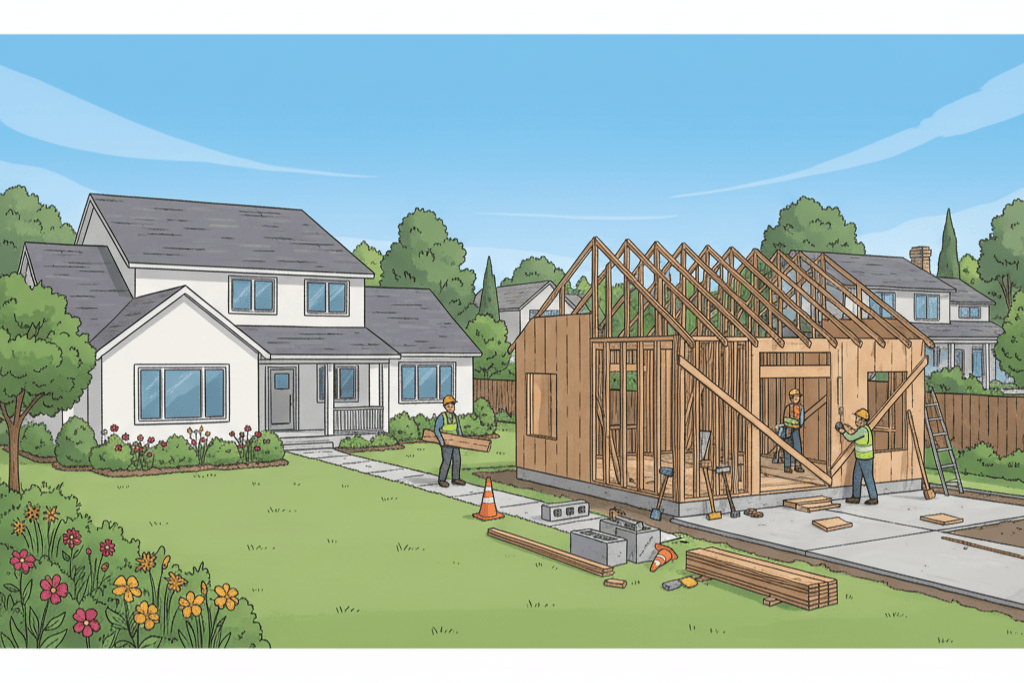
When you acquire a value-add multifamily property, the renovation period generates intense concentrations of qualifying hours. A 10-unit building undergoing unit-by-unit renovation can easily produce 400 to 600 hours of owner involvement over six to twelve months. Pair this with ongoing management of stabilized properties, and you have a robust hour total.
Documenting Multifamily Hours
Multifamily management generates high hour counts, but it also generates the kind of scattered, multi-task days that are harder to document. You might handle five tenant calls, review two contractor invoices, coordinate a turnover, and inspect a maintenance repair all in the same morning. Comprehensive logging is essential.
Property-Level Tracking
Even if you make the grouping election (which combines all properties into one activity for material participation), tracking hours at the property level provides:
- Support for the grouping election itself (demonstrating that each property is a rental activity)
- Backup in case the grouping election is challenged
- Data for property-level financial analysis
- Clear documentation of what you did, where, and when
Activity-Level Tracking
Within each property, log activities by category:
- Tenant Management (communications, lease enforcement, move-in/out)
- Maintenance and Repairs (vendor coordination, inspections, hands-on work)
- Marketing and Leasing (listings, showings, screenings, lease execution)
- Financial Administration (bookkeeping, bill payment, reporting)
- Renovation and Construction (project oversight, contractor management)
- Property Inspection (routine inspections, condition assessments)
Supporting Documentation
For multifamily properties, maintain:
- Tenant correspondence files (emails, texts, letters)
- Maintenance request records and completion logs
- Vendor invoices and payment records
- Lease files for each unit
- Inspection reports with photos
- Financial statements and rent rolls
- Capital improvement records
REPSLog streamlines this process by letting you tag each entry with a property and category, creating an organized record that can be filtered and exported for your CPA or an IRS audit.
Common Pitfalls for Multifamily REPS Investors
Pitfall 1: Assuming the Property Manager’s Hours Are Yours
If you hire a property management company, their team’s hours managing your building do not count toward your REPS total. You must log your own personal services — the time you spend overseeing the manager, making strategic decisions, coordinating capital improvements, and staying involved in property operations.
Pitfall 2: Losing REPS in a Stabilized Year
After completing renovations and achieving full lease-up, management hours can drop significantly. An investor who generated 900 hours during a renovation year might drop to 500 hours in the following stabilized year. If this falls below the 750-hour threshold or fails the more-than-half test, REPS is lost for that year.
Plan for this by maintaining active involvement in acquisition activity, continuous property improvements, and ongoing management. Do not coast after the renovation phase ends.
Pitfall 3: Ignoring the More-Than-Half Test
Multifamily investors with W-2 jobs often generate enough real estate hours to clear 750 but fail the more-than-half test because their W-2 hours are higher. This test runs in parallel and must be satisfied independently.
Pitfall 4: Not Making the Grouping Election
Failing to make the grouping election under Treas. Reg. 1.469-9(g) means proving material participation property by property. For multifamily investors with several buildings, this is unnecessarily complex and risky. Make the election in your first REPS-qualifying year.

Key Takeaways
- Multifamily properties generate more qualifying REPS hours than single-family rentals because more units mean more tenant interactions, maintenance, leasing, and management activity.
- The grouping election under Treas. Reg. 1.469-9(g) is essential for multifamily investors. It combines all rental activities into one for material participation, simplifying compliance dramatically.
- Cost segregation on multifamily properties generates massive first-year deductions that REPS converts from passive to non-passive, enabling immediate offset of W-2 and business income.
- Self-management maximizes qualifying hours. Property manager hours do not count toward your REPS total.
- Track hours at the property and activity level even with the grouping election. This provides backup documentation and supports the credibility of your REPS claim.
- Plan for stabilized years where renovation-driven hours decline. Maintain active involvement to sustain REPS qualification.
Frequently Asked Questions
Do I need to self-manage my multifamily property to qualify for REPS?
No, but self-management generates more qualifying hours. If you use a property manager, you must demonstrate that your own personal services — oversight, strategic decisions, capital planning, vendor management — meet the 750-hour and material participation thresholds. This is harder with a property manager handling day-to-day operations.
How does the grouping election affect property sales?
If you sell one property from a grouped activity, the sale is treated as a partial disposition of the grouped activity. This can affect how suspended losses (if any) are released. In some cases, ungrouping the property before sale may be advantageous, but the rules around modifying groupings are complex. Consult your CPA before selling any property in a grouped portfolio.
Can I group a multifamily property with a single-family rental?
Yes. The grouping election under Treas. Reg. 1.469-9(g) applies to all rental real estate activities regardless of property type. You can group single-family rentals, duplexes, apartment buildings, and commercial rentals into a single activity for material participation purposes.
Is there a limit to how many properties I can include in the grouping election?
No statutory limit exists. You can group as many rental properties as you own into a single activity. The election applies to all rental real estate activities in which you wish to claim material participation.
How many hours should I expect per unit per year?
As a rough guideline, self-managed residential rental units generate 20 to 50 hours per unit per year during stabilized operations. During renovation or lease-up, hours can be 50 to 100+ per unit. These figures vary significantly by property condition, tenant quality, and market.
Can my spouse and I both count hours on the same multifamily property?
For material participation purposes (including within a grouped activity), spouses filing jointly can combine their hours under IRC 469(h)(5). If you handle maintenance and your spouse handles tenant relations at the same building, both sets of hours count toward material participation. For REPS qualification, only the qualifying spouse’s hours count toward the 750-hour and more-than-half tests.
Does commercial multifamily (5+ units) depreciate differently than residential?
Residential rental property (where 80% or more of the gross rental income is from dwelling units) is depreciated over 27.5 years. If a multifamily building does not meet the 80% residential threshold (because a significant portion of revenue comes from commercial spaces), it may be classified as non-residential and depreciated over 39 years. Most apartment buildings qualify as residential.
Disclaimer: This article is for educational purposes only and does not constitute tax, legal, or financial advice. Tax laws are complex and subject to change. Consult a qualified tax professional before making any decisions related to Real Estate Professional Status, multifamily investing, or cost segregation.
Scale Your REPS Hours Across Your Multifamily Portfolio
As your portfolio grows, tracking hours across multiple properties and dozens of units becomes complex. REPSLog organizes your activity logs by property and category, monitors your progress toward the 750-hour threshold, and generates reports that your CPA can use directly.
Available on iOS | Android | Web