Qualifying as a real estate professional is only half the equation. The other half is owning properties that actually generate meaningful tax deductions worth unlocking. Too many investors obsess over the 750-hour requirement while neglecting the portfolio decisions that determine whether REPS qualification translates into real tax savings. This guide connects deal analysis to hour tracking, showing how better investment decisions create a more manageable and more profitable REPS strategy.
The Connection Between Portfolio Quality and REPS
REPS qualification under IRC Section 469(c)(7) lets you treat rental losses as non-passive, meaning they can offset your W-2 or active business income. But the size of those losses depends entirely on your properties:
- A property generating $5,000 in annual losses after depreciation saves you $1,850 at a 37% marginal rate.
- A property generating $50,000 in annual losses after accelerated depreciation (via cost segregation) saves you $18,500 at the same rate.
The effort to qualify as a REPS is roughly the same in both cases. You still need more than 750 hours and material participation. But the tax benefit differs by a factor of ten. Smart investors choose properties that maximize the per-hour return on their REPS qualification.
Deal Analysis Through a REPS Lens
When evaluating a potential acquisition, standard metrics like cap rate, cash-on-cash return, and appreciation potential remain important. But REPS investors should add a tax efficiency layer to their analysis.
Depreciation Potential
The primary source of REPS-eligible losses is depreciation. Properties with a higher ratio of depreciable improvements to land value generate more depreciation. Consider:
- Building-to-land ratio. A $300,000 property where $250,000 is allocated to improvements depreciates significantly more than one where only $150,000 is improvements. Markets with lower land values relative to improvement values are inherently more REPS-friendly.
- Cost segregation candidacy. Properties with substantial personal property components (appliances, fixtures, specialized systems) benefit most from cost segregation studies. Multi-unit properties, furnished short-term rentals, and commercial properties typically yield the highest cost segregation benefits.
- Age and condition. Older properties with original components being replaced can generate both depreciation on new items and potential deductions for the remaining basis of disposed components.
Management Intensity
Properties that are more management-intensive generate more countable hours. This is relevant when you need to hit the more than 750 hours threshold:
- Short-term rentals require significantly more hands-on management: guest communications, turnover cleaning coordination, pricing adjustments, listing optimization, and supply management. An STR can easily generate 200 to 400 hours per year of legitimate management activity per property.
- Value-add properties undergoing renovation generate substantial hours during the improvement phase: contractor management, design decisions, permitting, inspections, and project oversight.
- Multi-unit properties multiply management tasks: more tenants, more maintenance requests, more lease renewals, more accounting complexity.
- Turnkey, long-term single-family rentals with stable tenants generate the fewest management hours. An investor with four quiet single-family rentals might struggle to reach 750 hours.
Geographic Considerations
Properties in your local market versus out-of-state investments affect both your ability to log hours and the types of activities available to you:
- Local properties allow for property inspections, contractor meetings, hands-on maintenance, and other in-person activities that are easy to document.
- Remote properties shift your hours toward management oversight, financial analysis, remote vendor coordination, and strategic planning. These are valid REPS activities, but they require more deliberate documentation.
- Travel time to properties may be countable as real estate hours if the travel has a legitimate business purpose (property inspections, contractor meetings, tenant issues). Pure commuting to an office is generally not countable, but trips to your rental properties are business travel.
Building a Portfolio Optimized for REPS
Here is a framework for constructing a portfolio that maximizes both investment returns and REPS tax benefits:
The Core: High-Depreciation Assets
Your portfolio’s core should consist of properties with strong depreciation potential. These are the assets that generate the losses your REPS qualification unlocks:
- Properties eligible for cost segregation with year-one depreciation of 15% to 30% of the improvement value
- Properties purchased at prices where the improvement-to-land ratio is favorable
- Properties in your target condition (stabilized or value-add, depending on your strategy)
The Engine: Management-Intensive Properties
Include at least one or two properties that naturally generate significant management hours:
- A short-term rental that requires regular guest interaction and turnover management
- A value-add project in active renovation
- A small multi-family property with multiple tenants
These properties serve double duty: they are investments that generate returns and hour-generating assets that support your REPS qualification.
The Foundation: Sustainable Scale
Your portfolio should be sized so that normal management across all properties produces more than 750 hours without requiring you to invent activities. The right scale depends on your strategy:
- STR-heavy portfolios: Two to three actively managed short-term rentals can generate more than 750 hours
- Long-term rental portfolios: Four to eight properties typically provide enough management activity
- Mixed portfolios: A combination of STR and long-term properties offers the best balance of hour generation and portfolio stability
The Toolkit: Essential Resources
Financial Analysis Tools
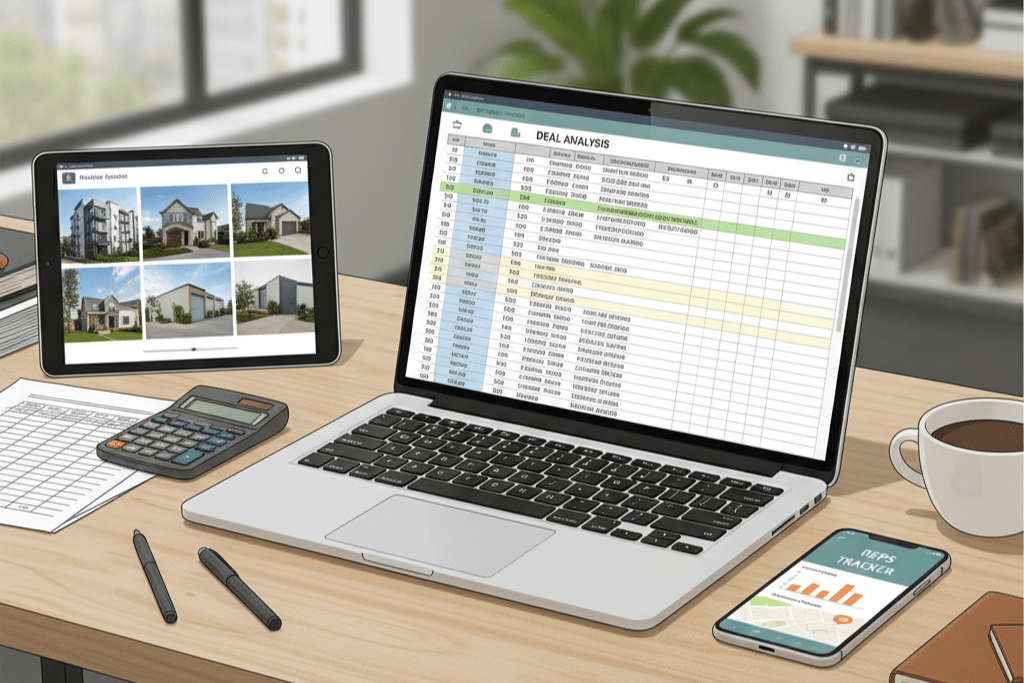
Before acquiring a property, model the tax impact alongside the investment return:
- Depreciation calculators that factor in cost segregation: model standard straight-line depreciation and then the accelerated depreciation from a cost segregation study. The difference is your REPS-specific tax benefit.
- Cash flow projections that include the tax savings: traditional cash flow analysis ignores the tax benefit of REPS. When you include the tax savings from non-passive loss deductions, properties that look marginal on cash flow alone may be strong investments on an after-tax basis.
- After-tax return analysis: Calculate your return including the REPS tax benefit. A property generating $8,000 in cash flow plus $15,000 in tax savings (from depreciation losses at a 37% rate) has an effective annual benefit of $23,000, not $8,000.
Hour Tracking System
Your hour tracking system is as much an investment tool as a tax compliance tool. It should provide:
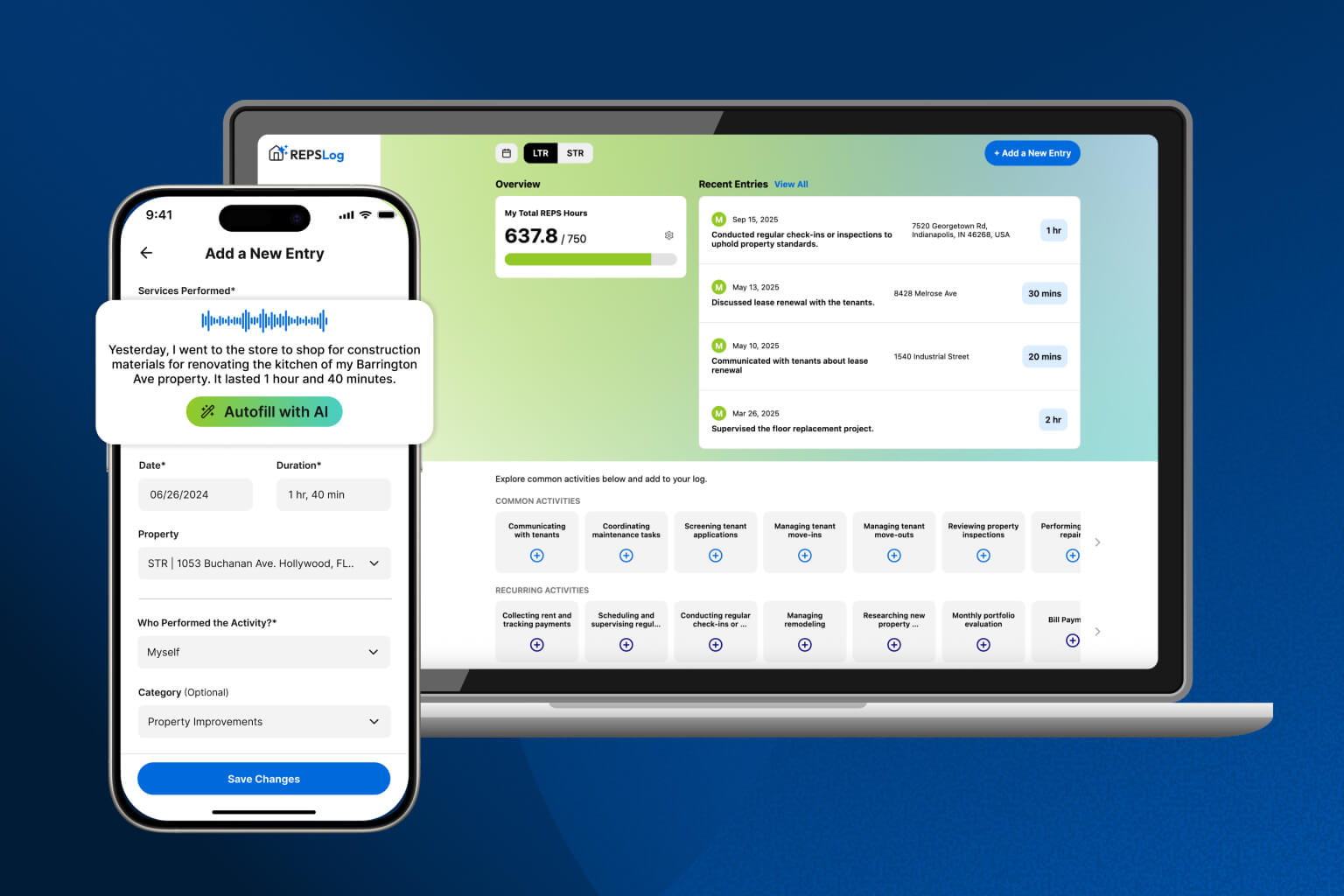
- Per-property tracking so you can see which properties generate the most management hours and which might need more attention
- Category-based logging to demonstrate diverse real estate activities (not just repetitive entries)
- Running totals so you always know where you stand against your 750-hour target
- Exportable reports for your CPA at tax time
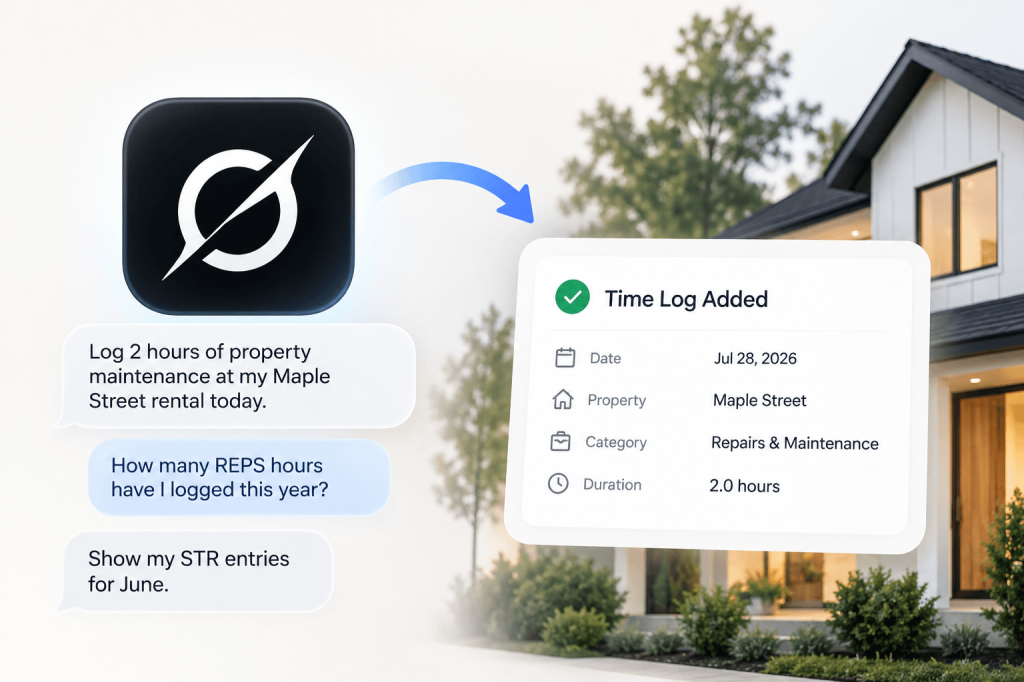
REPSLog provides all of these features in a mobile-first interface designed specifically for real estate professionals tracking their qualification hours.
Professional Team
Your REPS toolkit includes the professionals who support your strategy:
- CPA with REPS experience: Not all CPAs understand the passive activity rules at the depth required for REPS. Find one who has experience with real estate professionals, cost segregation, and passive activity loss planning.
- Cost segregation specialist: For properties valued at $200,000 or more, a cost segregation study almost always pays for itself in accelerated depreciation benefits.
- Real estate attorney: Entity structuring, lease review, and compliance with landlord-tenant laws in each jurisdiction.
Matching Activities to Properties
Different properties generate different types of countable hours. Here is how to think about which activities each property type supports:
Long-Term Rentals
- Tenant screening and lease management
- Maintenance coordination and contractor oversight
- Financial management and bookkeeping
- Property inspections (quarterly recommended)
- Rent analysis and market comparisons
- Insurance and compliance review
Estimated annual hours per property: 100 to 200
Short-Term Rentals
- Guest communications (inquiries, check-in instructions, reviews)
- Turnover coordination (cleaning, restocking, inspections between guests)
- Pricing optimization (seasonal adjustments, competitor analysis)
- Listing management (photos, descriptions, platform settings)
- Supply management (linens, toiletries, kitchen items)
- Maintenance (higher wear-and-tear than long-term rentals)
- Financial tracking (more complex with nightly rates and fees)
Estimated annual hours per property: 200 to 500
Value-Add / Renovation Properties
- Project planning and design
- Contractor selection and management
- Permitting and inspections
- Material selection and procurement
- Budget tracking and change order management
- Progress documentation
Estimated annual hours during renovation: 300 to 600 (highly variable)
Acquisition Activities
- Market research and deal sourcing
- Property tours and inspections
- Financial analysis and modeling
- Due diligence (title, inspection, environmental)
- Financing negotiations
- Closing coordination
Estimated annual hours: 100 to 300 (depends on acquisition pace)
When Portfolio Decisions Affect REPS Qualification
Your investment decisions directly impact your ability to qualify and the value of your qualification:
Selling a property reduces your management obligations and may make it harder to reach 750 hours with the remaining portfolio. Plan dispositions with your REPS hours in mind.
Hiring a full-service property manager offloads many tasks that generate countable hours. You can still qualify with a property manager, but you must maintain sufficient personal involvement. Consider a hybrid approach where you self-manage some aspects and delegate others.
Acquiring a new property adds both hours (from management) and deductions (from depreciation). Time your acquisitions to support both your hour target and your tax planning objectives.
Converting a long-term rental to a short-term rental dramatically increases management intensity and countable hours. This can be a strategic move if you are struggling to reach 750 hours with your current portfolio.
Frequently Asked Questions
Should I buy properties just to generate REPS hours?
No. Every property should be a sound investment on its own merits. REPS hours are a consideration in deal selection, not the primary driver. A bad investment that generates lots of hours still loses money.
How do I know if a property is worth a cost segregation study?
As a general rule, properties with improvement values of $200,000 or more typically generate enough accelerated depreciation to justify the cost of a study ($5,000 to $15,000, depending on complexity). Your cost segregation specialist can provide a preliminary estimate before you commit.
Can I count hours spent on deal analysis for properties I decide not to buy?
Yes. Time spent researching, analyzing, and evaluating properties you ultimately pass on still counts toward your real property trade or business hours. The activity is legitimate real estate work regardless of the outcome.
How do I handle hours for a property held in an LLC?
Your hours managing a property held in an LLC count toward REPS qualification. The ownership structure does not change the hour-counting rules. Log the hours as you would for any property, noting the LLC or entity name along with the property address.
What if my portfolio changes mid-year and I lose hour-generating properties?
This is a real risk when selling properties. Monitor your year-to-date hours closely, especially if you are planning a sale. You might need to increase involvement in remaining properties or accelerate acquisition activities to maintain your pace.
Is it better to self-manage or use a property manager for REPS purposes?
Self-managing generates more countable hours but also demands more time and expertise. The best approach depends on your skills, your portfolio size, and how close you are to the 750-hour threshold. Many REPS-qualifying investors use property managers for some properties and self-manage others.
How does the grouping election affect my portfolio strategy?
The grouping election under Treas. Reg. 1.469-9(g) lets you treat all rental properties as one activity for material participation. This simplifies qualification but limits flexibility when selling properties. Consider whether your portfolio plans involve future dispositions before electing.
Key Takeaways
- REPS qualification unlocks rental losses, but the size of those losses depends on your portfolio composition
- Properties with high depreciation potential (favorable building-to-land ratios, cost segregation candidacy) maximize the tax benefit of REPS
- Management-intensive properties like short-term rentals and value-add projects naturally generate more countable hours
- Model your after-tax returns including REPS tax savings, not just cash flow
- Build a professional team with REPS-specific experience (CPA, cost segregation specialist, attorney)
- Portfolio decisions (selling, hiring property managers, acquiring new properties) directly affect your ability to qualify
- Every property should be a good investment on its own; REPS hours are a bonus, not the primary acquisition criterion
Track Your Portfolio Hours with REPSLog
REPSLog connects your daily property management activities to your REPS qualification in real time. Track hours by property, see running totals toward your 750-hour target, and generate reports for your CPA at year-end.
Available on iOS | Android | Web
This article is for educational purposes only and does not constitute tax or legal advice. Consult a qualified tax professional for guidance tailored to your situation.
Do this in REPSLog
- Participants: log who did each activity, so spouse hours count where allowed and contractor hours stay separate.
- Multiple Properties: add each rental by address, mark it LTR or STR, see hours per property.
- CPA-ready Export (PDF and CSV): a tax year as PDF and CSV, split by LTR and STR, with receipts.
Step by step in the Help Center: how to use it. Try REPSLog free for 14 days on iPhone, Android or the web app.