You qualify for REPS. You have your contemporaneous activity log, your property financial records, your CPA’s work papers, and your filed tax return. Everything is in order. Now the question becomes: how long do you need to keep all of this?
The answer is not as simple as “three years” or “seven years.” The IRS statute of limitations for different types of tax issues varies, and REPS claims have characteristics that make them particularly sensitive to audit timing. Some REPS records should be kept for a decade or more. Others can be safely discarded after a few years. Knowing the difference protects you from both audit risk and unnecessary document hoarding.
This guide breaks down the retention rules that apply specifically to REPS taxpayers, identifies which records matter most, and provides practical advice on digital and physical storage.
The IRS Statute of Limitations: The Basics
The statute of limitations (SOL) determines how long the IRS has to audit your return and assess additional taxes. The general rules are:
Three-Year Rule (Standard)
Under IRC Section 6501(a), the IRS generally has three years from the date you file your return (or the due date, whichever is later) to assess additional tax. For a 2025 return filed on April 15, 2026, the SOL expires on April 15, 2029.
This is the rule most people know, and it applies to straightforward situations where the return is filed correctly and completely.
Six-Year Rule (Substantial Omission)
Under IRC Section 6501(e), the SOL extends to six years if you omit more than 25% of your gross income from your return. For REPS taxpayers, this rule can apply if the IRS determines that your rental income was substantially underreported.
Importantly, the IRS has argued in some cases that overstated deductions (including inflated REPS-related depreciation) can trigger the six-year rule. While the law on this point has evolved, it is prudent for REPS taxpayers to retain records for at least six years to be safe.
Unlimited Statute (Fraud or No Return Filed)
If the IRS can prove fraud, there is no statute of limitations. The IRS can audit any year, any time. If you never filed a return for a particular year, there is also no SOL.
This is relevant for REPS because fabricating hours or knowingly claiming REPS without meeting the requirements could be characterized as fraud, eliminating any time limit on the IRS’s ability to challenge the return.
Seven-Year Rule (Loss Deductions and Bad Debts)
Under IRC Section 6501(h), if you claim a deduction for worthless securities or bad debts, the SOL extends to seven years. This is less directly relevant to REPS but can apply to investors who write off worthless partnership interests in real estate ventures.

Why REPS Records Deserve Longer Retention
Beyond the standard statute of limitations, there are REPS-specific reasons to keep records longer than you might for a typical tax return.
The Grouping Election Is Ongoing
If you make the grouping election under Treas. Reg. 1.469-9(g), that election affects every subsequent tax year. The IRS can review whether the election was properly made by examining the return to which the election statement was attached. If that return is from 2020 and you are audited in 2028 for your 2025 return, the examiner may want to trace the grouping election back to its origin.
Keep the return and election statement from the year you first made the grouping election for as long as you continue to rely on it — potentially for the rest of your investing career.
Suspended Passive Losses Have No Expiration
If you had passive losses suspended in years before you qualified for REPS, those losses may be carried forward and eventually used. The IRS can challenge the basis for those losses in the year you use them, which could be many years after the losses were originally generated.
Example: You had $200,000 in suspended passive losses from 2019-2022 (before qualifying for REPS). In 2027, you sell a property and release those suspended losses to offset the gain. The IRS audits your 2027 return and questions the basis of the suspended losses. You need records from 2019-2022 to support the original loss calculations.
Depreciation Records Must Be Kept for the Life of the Asset Plus the SOL
Depreciation is calculated over the life of the asset (27.5 years for residential rental property, 39 years for commercial). You must be able to support your depreciation deductions for the entire period you own the property plus the applicable SOL period after you dispose of it.
If you buy a residential rental property in 2020 and sell it in 2040, you need depreciation records from 2020 through 2040, plus three to six years after the sale (to cover the SOL on the disposition year’s return). That is potentially 2020 through 2046 — 26 years of record retention for a single property.
Cost Segregation Studies Are Referenced for Decades
A cost segregation study performed at acquisition establishes the classification and depreciation schedule for various building components. This study supports your depreciation deductions for the life of the shortest-lived component (5 years) through the life of the building itself (27.5 or 39 years). Keep the full cost segregation report and supporting appraisal for as long as you own the property and for the SOL period after disposition.
Year-Over-Year REPS Qualification Affects Prior Years
In some circumstances, losing REPS status in one year can have implications for prior years. If the IRS determines that you never actually qualified for REPS in a year you claimed it, all of the losses you deducted that year may be recharacterized as passive and suspended. This could create a domino effect across multiple years.
Keeping your REPS activity logs for every qualifying year protects you against retroactive challenges.
What Specifically to Keep (And for How Long)
Records to Keep for Three Years After Filing
These are basic records that are unlikely to be needed after the standard SOL expires:
- Routine tenant correspondence (not related to disputes or legal actions)
- Routine vendor invoices for minor operating expenses
- Utility bills
- Basic property management records
Records to Keep for Six to Seven Years After Filing
These records support your income and deduction positions and should survive the extended SOL:
- REPS activity logs (contemporaneous hour records for each year you claim REPS)
- Non-real-estate hour records (W-2 schedules, business hour logs for the more-than-half test)
- Filed tax returns (Form 1040, Schedule E, Form 8582, Form 8960)
- K-1 forms from partnerships and LLCs
- Rental income records (lease agreements, rent rolls, bank statements showing deposits)
- Operating expense receipts (insurance, property taxes, maintenance, repairs)
- Contractor invoices and 1099 forms
- Mortgage interest statements (Form 1098)
- Property insurance policies and claims
- CPA work papers and engagement letters
Records to Keep for the Life of the Asset Plus the SOL
These records relate to the property’s basis, depreciation, and capital improvements, and are needed for as long as you own the property and for the SOL period after disposition:
- Purchase closing statements (HUD-1 or closing disclosure) showing acquisition cost and closing costs
- Cost segregation studies (full report and supporting documentation)
- Capital improvement records (invoices, contracts, permits, before/after photos) for any improvements that add to the property’s depreciable basis
- Depreciation schedules (year-by-year depreciation calculations for the property and each component)
- Sale closing statements (when you eventually dispose of the property)
- 1031 exchange documentation (if applicable — exchange agreements, qualified intermediary records, replacement property identification)
Records to Keep Indefinitely
Some records should never be discarded because they establish foundational positions that may be questioned at any time:
- The first tax return on which you claimed REPS (establishes the beginning of your REPS history)
- The grouping election statement under Treas. Reg. 1.469-9(g) (filed with the return in the first year of the election)
- Entity formation documents (LLC operating agreements, partnership agreements, articles of organization) — for as long as the entity exists
- Property deeds — for as long as you own the property
Digital Storage Best Practices
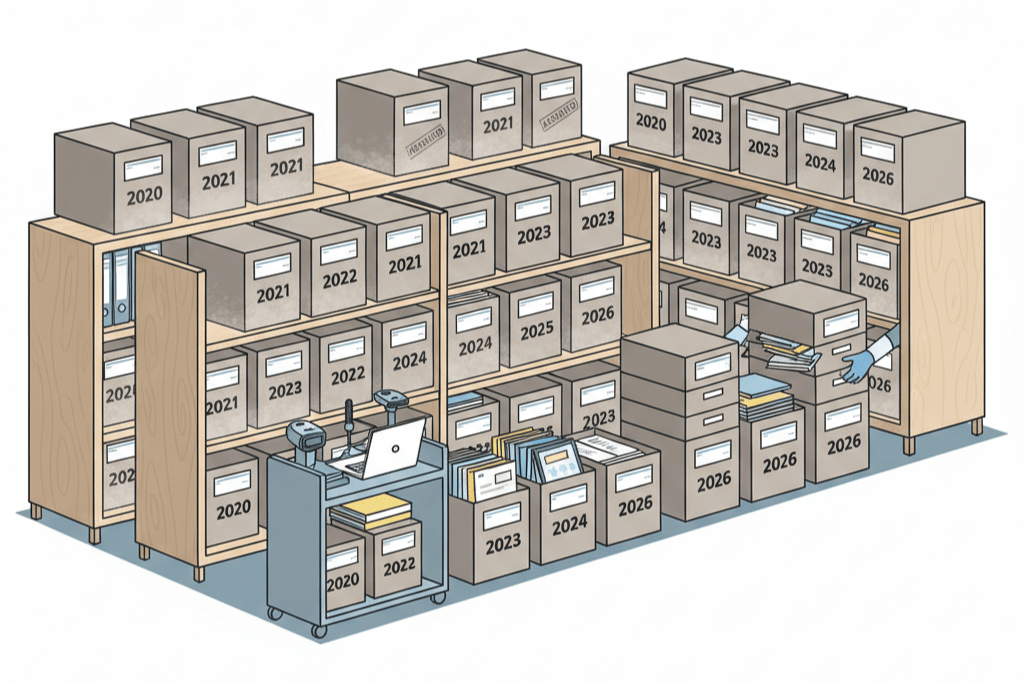
Modern REPS record-keeping is overwhelmingly digital. Here is how to manage digital records effectively:
Use Cloud Storage with Redundancy
Store records in at least two locations: a cloud service (Google Drive, Dropbox, iCloud, OneDrive) and a local backup (external hard drive, NAS). Cloud storage protects against local hardware failure; local backup protects against cloud service outages or account lockouts.
Organize by Year and Property
Create a folder structure that mirrors your tax filing:
“ REPS Records/ 2025/ Activity Log/ Tax Returns/ Property - 123 Main St/ Income Records/ Expense Receipts/ Maintenance Records/ Property - 456 Oak Ave/ Income Records/ Expense Receipts/ Capital Improvements/ CPA Correspondence/ 2026/ ... “
Use PDF for Long-Term Documents
Convert important documents to PDF format for long-term storage. PDFs are universally readable and unlikely to become obsolete. Scan paper documents (closing statements, signed leases, handwritten notes) and store the PDFs alongside your digital records.
Export App Data Regularly
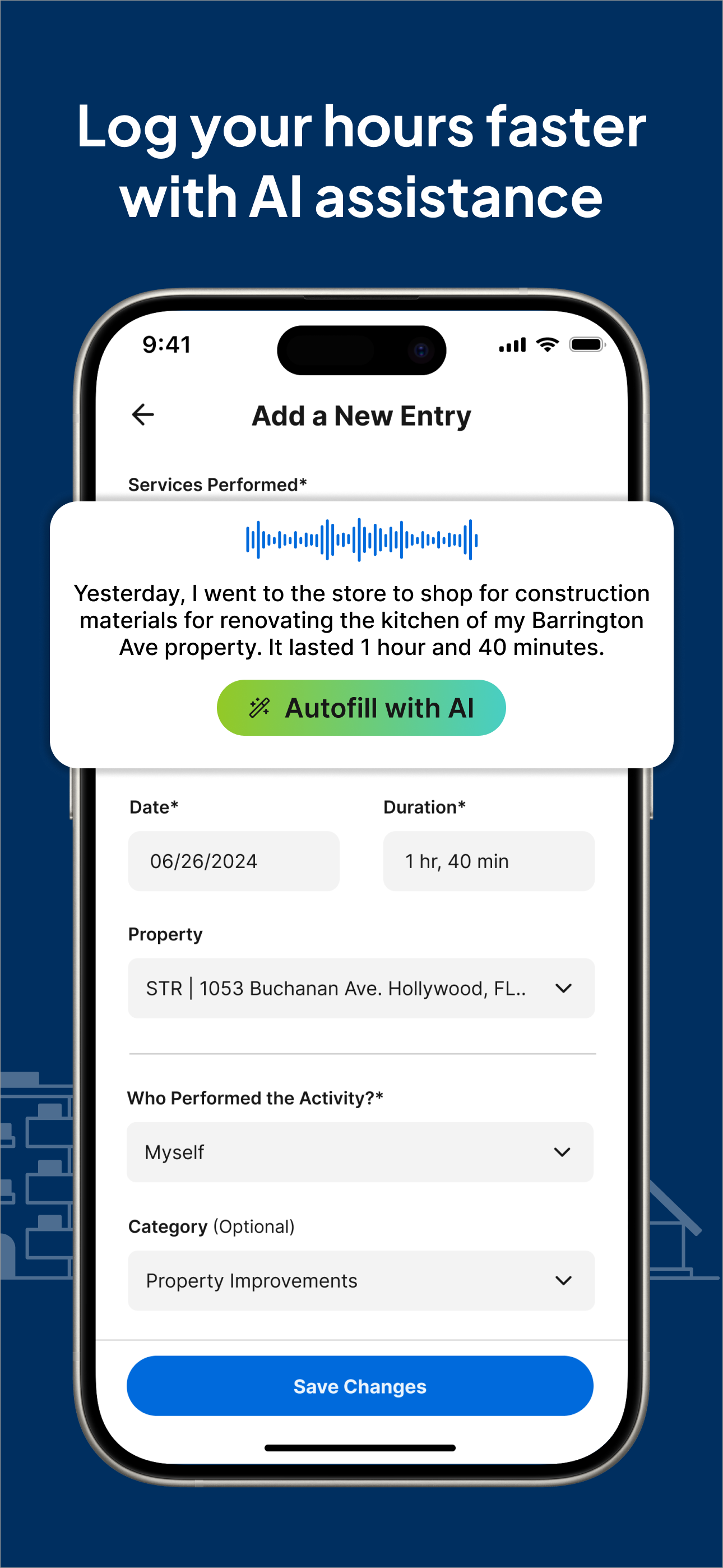
If you use REPSLog or another tracking app, export your data periodically (at least annually) and save the export in your filing system. This creates a standalone backup of your activity log that is not dependent on the app continuing to operate.
Date and Label Files Clearly
Name files with dates and descriptive labels: “2025-06-15_HVAC_Invoice_123MainSt.pdf” is retrievable. “scan003.pdf” is not.
Physical Record Retention
Some records are still generated in physical form (paper closing statements, handwritten notes, printed contractor invoices). For physical records:
- Store in a fireproof, waterproof container or safe
- Organize by year and property, matching your digital structure
- Consider scanning and digitizing as a primary record, keeping physical copies as backup
- Label containers clearly with year ranges and contents
Common Retention Mistakes
Mistake 1: Destroying Records After Three Years
The three-year SOL is the minimum. For REPS taxpayers, the six-year rule, depreciation requirements, and suspended loss carry-forwards all extend the necessary retention period. Destroying REPS activity logs after three years is premature.
Mistake 2: Keeping Everything Forever Without Organization
At the other extreme, some investors keep every scrap of paper and every email forever, thrown into boxes or folders with no organization. Volume without organization is nearly as useless as no records at all. In an audit, you need to produce specific records quickly. An organized system with clear retention periods is better than an unmanaged archive.
Mistake 3: Not Keeping Non-Real-Estate Hour Records
The more-than-half test requires proving that your real estate hours exceeded your non-real-estate hours. If you are audited, the IRS may ask for evidence of your non-real-estate work hours. Keep W-2 records, pay stubs, and any documentation of your non-real-estate working schedule for the same retention period as your REPS activity log.
Mistake 4: Relying Solely on Your CPA’s Copies
Your CPA keeps copies of your filed returns and may retain work papers for several years. But CPA retention policies vary, and CPAs sometimes retire, close their practices, or lose records. Your records are your responsibility. Maintain your own copies of everything.
A Practical Retention Schedule
| Record Type | Minimum Retention Period |
|---|---|
| REPS activity log | 7 years after filing the return for that year |
| Filed tax returns | 7 years after filing |
| Grouping election statement | Indefinitely (as long as the election is in effect) |
| Property purchase/sale documents | Life of ownership + 7 years after disposition |
| Cost segregation studies | Life of ownership + 7 years after disposition |
| Depreciation schedules | Life of ownership + 7 years after disposition |
| Capital improvement records | Life of ownership + 7 years after disposition |
| Rental income records (leases, rent rolls) | 7 years after the tax year they relate to |
| Operating expense receipts | 7 years after the tax year they relate to |
| K-1 forms | 7 years after filing the return |
| Entity documents (LLC, partnership) | Indefinitely (as long as the entity exists) |
| Non-real-estate hour records | 7 years after filing the REPS return for that year |
| 1031 exchange documentation | Life of replacement property + 7 years after final disposition |
Key Takeaways
- The standard three-year statute of limitations is not enough for REPS records. Extended SOL rules, depreciation timelines, and suspended loss carry-forwards require longer retention.
- Keep REPS activity logs and related records for at least seven years after filing the return for each qualifying year.
- Depreciation and cost segregation records must be kept for the life of the property plus the SOL period after disposition.
- The grouping election statement should be kept indefinitely since it is referenced in every subsequent year.
- Use cloud storage with local backup for digital records, organized by year and property.
- Export app data annually to create standalone backups independent of the app.
- Do not rely solely on your CPA. Maintain your own complete set of records.
Frequently Asked Questions
Can I keep only digital copies, or do I need to keep paper originals?
The IRS generally accepts digital copies of records, provided they are legible and accurate representations of the originals. Revenue Procedure 98-25 establishes standards for electronic record-keeping. Scan paper documents to PDF, verify the scan is complete and legible, and store the digital version. You can discard the paper original after scanning, although some practitioners recommend keeping paper originals of critical documents (closing statements, deeds) as backup.
How long should I keep my REPS activity log if I stop qualifying for REPS?
Keep the logs from your qualifying years for at least seven years after the return was filed. If you have suspended passive losses from non-qualifying years that were later released, keep records supporting those losses for seven years after the return on which they were deducted.
What if I lose my records in a fire or flood?
This is why backup systems matter. If you lose records, attempt to reconstruct them from secondary sources: your CPA’s copies, bank and credit card statements, property management software records, email archives, and phone records. Contact the IRS for copies of filed returns (Form 4506). Going forward, use cloud storage to prevent single-point-of-failure loss.
Does the statute of limitations restart if I amend a return?
Filing an amended return (Form 1040-X) generally restarts the three-year SOL from the date the amended return is filed, but only for the items changed in the amendment. If you amend a return to claim additional REPS-related deductions, the SOL for those deductions runs from the amended filing date.
Should I keep records for properties I have sold?
Yes. Keep records supporting the property’s basis, depreciation, and disposition for at least seven years after filing the return that reports the sale. If you completed a 1031 exchange, keep records of the relinquished property for as long as you own the replacement property (since the basis carries over) plus seven years after disposing of the replacement property.
What records should I request from my CPA each year?
Request copies of your complete filed return (all schedules and forms), the grouping election statement (if filed), any REPS-related election statements, depreciation schedules for each property, and any work papers that document how REPS-related positions were determined. Store these with your own records.
Disclaimer: This article is for educational purposes only and does not constitute tax, legal, or financial advice. Tax laws are complex and subject to change. Consult a qualified tax professional before making any decisions related to record retention or Real Estate Professional Status.
Build Records Worth Keeping with REPSLog
REPSLog creates the detailed, timestamped activity logs that form the foundation of your REPS documentation. Export your records anytime, generate reports for your CPA, and maintain the audit-ready records the IRS expects — for as long as you need them.
Available on iOS | Android | Web