Real Estate Professional Status (REPS) is one of the most effective tools available to real estate investors for reducing their regular federal income tax. But many investors focus so heavily on qualifying for REPS that they overlook another layer of the tax code lurking in the background: the Alternative Minimum Tax (AMT). Understanding how REPS-driven deductions interact with the AMT is critical for accurate tax planning and for avoiding unpleasant surprises at filing time.
This article explains how the AMT works, why REPS losses can trigger AMT liability, and what planning strategies investors can use to navigate both systems simultaneously.
What Is the Alternative Minimum Tax?
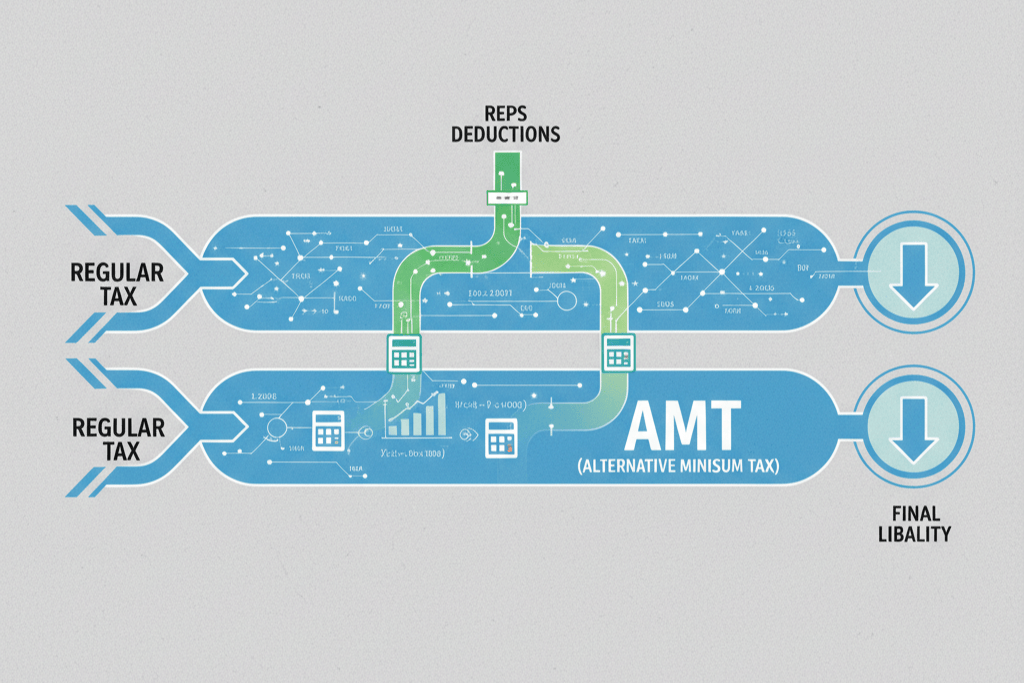
The AMT is a parallel tax system that runs alongside the regular income tax. Congress originally created it to ensure that high-income taxpayers who use significant deductions, credits, and exemptions still pay a minimum amount of tax. In practice, the AMT recalculates your taxable income by adding back certain deductions and applying a separate rate structure.
Here is how the AMT works at a high level:
- Calculate your regular taxable income using the normal rules
- Calculate your Alternative Minimum Taxable Income (AMTI) by adding back specific “preference items” and “adjustment items” to your regular taxable income
- Subtract the AMT exemption amount (which phases out at higher income levels)
- Apply the AMT tax rates (26% on AMTI up to a threshold, 28% above it)
- Compare your AMT liability to your regular tax liability — you pay whichever is higher
The AMT exemption amounts are adjusted annually for inflation. For the 2026 tax year, married filing jointly taxpayers receive a meaningful exemption, but it phases out as income rises. The phase-out means that very high earners gradually lose the benefit of the exemption, effectively increasing their AMT exposure.

Why REPS Investors Face AMT Risk
When you qualify for REPS and materially participate in your rental activities, your rental losses become non-passive. This allows them to offset your active income — W-2 wages, business profits, and other ordinary income — on your regular tax return. The larger your rental losses (usually driven by depreciation), the more your regular taxable income drops.
Here is where the AMT enters the picture. Several deductions that reduce your regular taxable income are treated differently under the AMT calculation.
Depreciation Adjustments
The most significant AMT adjustment for real estate investors involves depreciation. Under the regular tax system, residential rental property is depreciated over 27.5 years using the straight-line method, and nonresidential property over 39 years. However, when a cost segregation study is performed, components of the property are reclassified to shorter recovery periods (5, 7, or 15 years) and may qualify for accelerated depreciation methods.
Under the AMT system, personal property (the components reclassified through cost segregation) must generally be depreciated using the 150% declining balance method over the Alternative Depreciation System (ADS) recovery periods, rather than the more favorable MACRS rates used for regular tax purposes. This creates a timing difference: you take larger deductions sooner for regular tax but smaller deductions under the AMT calculation.
The result is an AMT adjustment that increases your AMTI in the early years of ownership and decreases it in later years. For investors who recently performed cost segregation studies and took large first-year deductions, this adjustment can be substantial.
Bonus Depreciation and Section 179
Bonus depreciation — which allows a significant percentage of certain asset costs to be deducted in the year placed in service — generally does not create an AMT adjustment under current law. This is a crucial distinction. Since the Tax Cuts and Jobs Act (TCJA) of 2017, bonus depreciation has been allowed for both regular tax and AMT purposes. However, the bonus depreciation percentage has been phasing down, and the rules may change again with future legislation. Always verify the current-year treatment with your CPA.
Section 179 expensing is also generally allowed for both regular tax and AMT purposes, so it typically does not create an AMT preference item.
State and Local Tax (SALT) Deduction
The SALT deduction cap (currently $10,000 for most filers) has reduced but not eliminated the AMT impact of state and local taxes. Before the TCJA, the SALT deduction was one of the primary triggers for AMT liability, because state income taxes were fully deductible for regular tax but not for AMT. With the cap in place, the differential between regular tax and AMT treatment of SALT has narrowed, though it still exists in certain scenarios.
For REPS investors in high-tax states like California or New York, the interplay between SALT caps, large rental losses, and AMT calculations requires careful modeling.
How REPS Losses Specifically Affect the AMT Calculation
When a REPS-qualifying investor takes large rental losses — say $200,000 in depreciation-driven losses offsetting W-2 income on the regular return — the AMT calculation may add back a portion of those losses. The add-back is not typically the full amount of the rental loss. Rather, it is the difference between the regular tax depreciation and the AMT depreciation for the same assets.
Consider this simplified example:
- Regular tax depreciation on cost-segregated components: $180,000
- AMT depreciation on the same components (using ADS lives and 150% DB): $110,000
- AMT adjustment: $70,000 added back to AMTI
The investor’s regular taxable income may be $300,000 after the rental losses, but their AMTI could be $370,000 after the depreciation adjustment. Depending on the exemption amount and phase-out, this could push them into AMT territory.
The critical point: REPS does not cause AMT problems by itself. The interaction arises because REPS unlocks the ability to use accelerated depreciation deductions against active income, and those accelerated deductions happen to be an AMT adjustment item. Investors who use only straight-line depreciation with no cost segregation will have minimal AMT adjustments from their rental activities.
The AMT Credit: Getting Your Money Back
One important but often overlooked feature of the AMT is the AMT credit. When you pay AMT in one year due to timing differences (like accelerated depreciation), you generate an AMT credit that can be carried forward and used in future years to reduce your regular tax liability.
The AMT credit is available only for “deferral preferences” — items that represent timing differences rather than permanent exclusions. Since depreciation adjustments are timing differences (you are deducting the same total amount over a different number of years), the AMT you pay due to depreciation creates a credit you can use later.
In practice, this means the AMT on depreciation timing differences is more like a prepayment of tax than a permanent additional tax. You pay more now but get it back later when the depreciation deductions reverse. However, having cash tied up in prepaid taxes still has a real economic cost, and the timing of when you recover the credit is uncertain.
Planning Strategies for REPS Investors Facing AMT
Strategy 1: Model Both Systems Before Year-End
The most important strategy is simply awareness. Run a tax projection that includes both regular tax and AMT calculations before December 31. This allows you to see whether additional depreciation deductions will actually reduce your total tax or just shift liability from regular tax to AMT.
Your CPA should be running this dual calculation routinely. If they are not, it is worth requesting it or finding a tax advisor who understands REPS-AMT interaction.
Strategy 2: Optimize Cost Segregation Timing
If you are considering a cost segregation study on a newly acquired property, model the AMT impact before committing. In some cases, the timing of when you perform the study and take the deductions can be optimized to minimize AMT exposure.
For example, if you are in a year where your regular tax rate is high and your AMT exemption provides significant shelter, taking aggressive cost segregation deductions may produce a net benefit even after AMT. In other years, it may make sense to defer the study.
Strategy 3: Consider the Phase-Down of Bonus Depreciation
As bonus depreciation phases down, more investors will rely on standard MACRS depreciation for cost-segregated components. Standard MACRS depreciation does create AMT adjustments (unlike bonus depreciation), which makes AMT planning more relevant for recent acquisitions.
Understanding where bonus depreciation stands in the phase-down schedule for the current tax year is essential for projecting AMT impact.
Strategy 4: Evaluate Property Dispositions
When you sell a property, the depreciation timing differences reverse. In the year of sale, your AMT depreciation adjustment goes the other way — reducing AMTI rather than increasing it. This can be a strategic consideration when deciding which properties to sell and when.
Additionally, suspended AMT credits may become usable in the year of a property disposition if your regular tax liability exceeds your AMT liability that year.
Strategy 5: Coordinate with Income Timing
If you have flexibility in the timing of income recognition (capital gains from sales, Roth conversions, business distributions), you can coordinate those events with years where your AMT exposure is lower. Bunching income into years with higher regular tax rates and lower AMT exposure — or spreading it across years — can produce meaningful savings.
Strategy 6: Keep Your AMT Credit Carryforward Organized
Many investors who have paid AMT in past years have AMT credit carryforwards they have forgotten about or that their current CPA is not tracking. These credits can reduce your regular tax liability dollar for dollar in future years. Ensure your tax records include a clear schedule of AMT credits generated and used.
Common Mistakes REPS Investors Make with AMT
Mistake 1: Ignoring AMT Entirely
Some investors and even some CPAs focus exclusively on the regular tax return when planning REPS strategies. They celebrate a large reduction in regular taxable income without checking whether the same deductions trigger AMT liability that offsets part of the savings.
Mistake 2: Assuming All Depreciation Creates AMT Problems
Not all depreciation is an AMT adjustment item. Straight-line depreciation on residential rental property using the regular MACRS recovery period (27.5 years) does not create an AMT adjustment. The adjustments arise from accelerated methods on shorter-lived property, primarily the components identified in cost segregation studies.
Mistake 3: Overlooking the AMT Credit
Paying AMT feels like throwing money away, but if the AMT was triggered by timing differences, you are building up a credit that comes back to you. Understanding this changes the analysis from “AMT wipes out my savings” to “AMT shifts some of my savings to future years.”
Mistake 4: Failing to Track Year-Over-Year AMT Position
Your AMT position changes from year to year as depreciation deductions phase in and out, properties are bought and sold, and income levels fluctuate. A strategy that minimized AMT last year may not work this year. Annual modeling is essential.
FAQs
Does qualifying for REPS automatically trigger the AMT?
No. REPS itself does not trigger AMT. The AMT risk arises from the accelerated depreciation deductions that REPS allows you to use against active income. If your rental depreciation consists only of straight-line deductions on the standard 27.5-year schedule, there is minimal AMT adjustment. Cost segregation studies, which reclassify property components to shorter lives with accelerated methods, are the primary driver of AMT adjustments for REPS investors.
Can REPS losses be fully used if I am subject to AMT?
Your REPS losses reduce your regular taxable income regardless of your AMT position. However, if the AMT calculation produces a higher tax liability than your regular tax, you pay the AMT amount instead. The losses are still claimed — you just may not receive the full immediate tax benefit if AMT applies. The AMT credit mechanism allows you to recover the difference in future years.
Is the AMT more likely to affect me if I recently did a cost segregation study?
Yes. Cost segregation studies create the largest AMT adjustments in the first few years after the study, because that is when the gap between regular MACRS depreciation and AMT depreciation is widest. As the years progress, the adjustment shrinks and eventually reverses.
Has the Tax Cuts and Jobs Act eliminated AMT concerns for most investors?
The TCJA significantly raised the AMT exemption amount and expanded its phase-out range, which removed many middle-income taxpayers from AMT exposure. However, high-income real estate investors with large depreciation deductions can still be subject to AMT, especially if they use aggressive cost segregation strategies. The TCJA provisions are currently scheduled to sunset, which could expand AMT exposure again.
Should I avoid cost segregation to prevent AMT?
Generally, no. The total tax benefit of cost segregation usually exceeds the AMT cost, because the AMT on timing differences generates a credit you recover later. The net present value of accelerating deductions typically outweighs the time-value cost of the temporary AMT payment. However, every situation is different, and the analysis should be run on your specific numbers.
How does the AMT credit carryforward work?
When you pay AMT due to timing differences (like depreciation adjustments), the excess of AMT over regular tax generates a credit. This credit carries forward indefinitely and can be used in future years when your regular tax exceeds your tentative minimum tax. Essentially, you are prepaying tax that you recover when the timing differences reverse.
Does my state have its own AMT?
Several states impose their own version of the AMT, with varying rules that may or may not conform to federal AMT calculations. California, for example, has a state AMT that can compound the impact for REPS investors. Check your state’s rules or consult a tax professional familiar with your state’s treatment.

Key Takeaways
- REPS itself does not trigger AMT, but the accelerated depreciation deductions it unlocks can create AMT adjustments that increase your Alternative Minimum Taxable Income
- Cost segregation studies are the primary driver of AMT adjustments for REPS investors, because they reclassify property components to shorter lives with accelerated depreciation methods
- The AMT credit mechanism means that AMT paid on timing differences is recoverable in future years, making it more like a tax prepayment than a permanent additional tax
- Bonus depreciation does not typically create an AMT adjustment under current law, which is an important distinction from standard accelerated depreciation
- Annual tax projections that model both regular tax and AMT are essential for REPS investors to understand their true tax position
- Strategic timing of cost segregation studies, property dispositions, and income recognition can minimize the AMT impact over a multi-year period
- High-income REPS investors in high-tax states face compounded AMT risk and should work with tax professionals who understand both federal and state AMT rules
Track Your REPS Hours and Stay Ahead of AMT Surprises
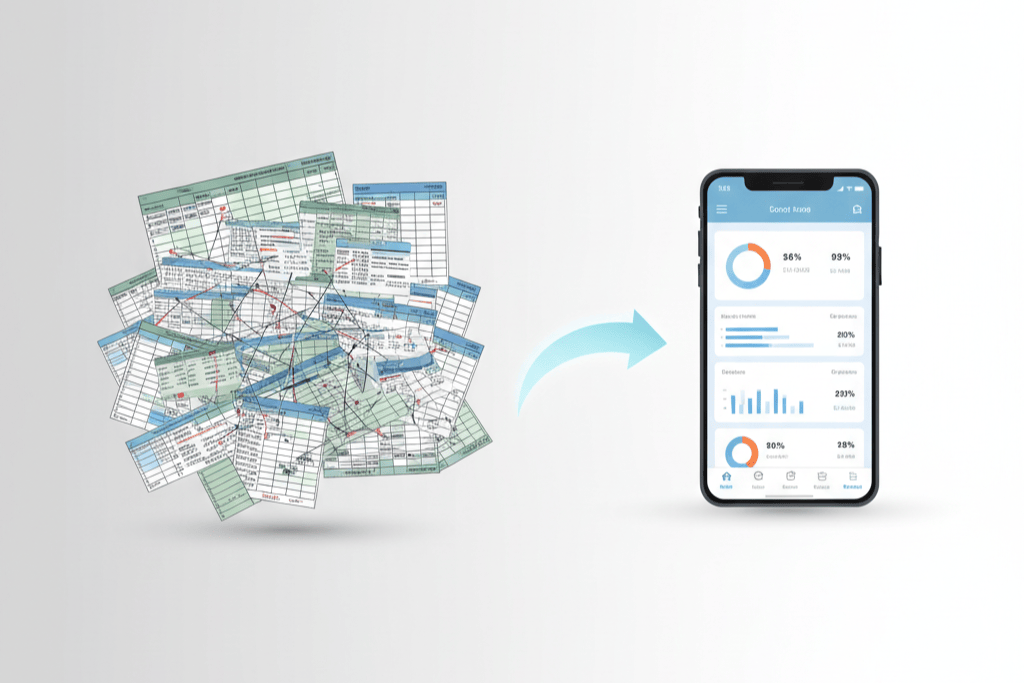
Accurate hour tracking is the foundation of every REPS tax strategy — including AMT planning. When your CPA can see exactly how your hours break down by property and activity, they can model the full tax picture, including AMT exposure, before year-end.
REPSLog is purpose-built for real estate investors pursuing REPS qualification. Log entries in seconds, track your progress toward the 750-hour threshold in real time, and export audit-ready reports that give your CPA the data they need to optimize your tax position across both regular tax and AMT.
Available on iOS and Android, or on the web at app.reps-log.com. Start tracking your hours free today.

This article is for educational purposes only and does not constitute tax or legal advice. Consult a qualified tax professional for guidance specific to your situation.