If you’re a real estate investor with REPS status or leveraging the STR loophole, 2025 just got a whole lot more exciting: 100% bonus depreciation is back.
This change reopens one of the most powerful tax strategies available to active investors. Whether you own long-term rentals, short-term vacation homes, or a portfolio of both, understanding how to use bonus depreciation real estate 2025 laws to your advantage can mean saving tens—or even hundreds—of thousands in taxes.
In this post, we’ll explore how real estate professionals can maximize bonus depreciation this year, what to invest in, and how to use REPSLog to make sure you stay compliant and audit-ready.
What Is Bonus Depreciation?
Bonus depreciation allows investors to deduct a large portion of an asset’s cost in the first year it’s placed in service. In 2025, the return of 100% bonus depreciation means you can fully write off eligible improvements like appliances, roofing, HVAC, and even the building structure (through cost segregation).
This is a game-changer for active real estate professionals.
But to qualify for these accelerated deductions, you’ll need to materially participate in your real estate activities—or qualify via the short-term rental (STR) loophole.
What Is the OBBB and Why It Matters
The return of 100% bonus depreciation in 2025 is now official, thanks to the Opportunity to Boost Base Bonus Act (OBBB), which was passed and signed into law. The OBBB reverses the phase-down schedule that began in 2023 and fully reinstates 100% bonus depreciation for qualifying assets placed in service through December 31, 2025. This legislative win provides clarity and urgency for real estate investors and short-term rental owners looking to make tax-efficient purchases and renovations. With the clock ticking on this renewed benefit, investors now have a short window to strategically deploy capital and lock in massive first-year deductions.
Real Estate Professional Status (REPS) and the Short Term Rental Tax Loophole
REPS status is one of the most powerful tools in the tax code. It allows investors to treat rental losses (including those created by bonus depreciation) as non-passive, offsetting other income like W-2 wages or business profits.
To qualify for REPS, you must:
- Work at least 750 hours in real estate activities
- Spend more time in real estate than any other profession
STR owners can benefit even without REPS if:
- The average stay is less than 7 days
- You materially participate in managing the property
Either way, the opportunity to pair active participation with 100% bonus depreciation 2025 creates massive tax savings.
Investment Options: Where to Put Your Money in 2025
Not all real estate deals offer the same depreciation potential. Understanding your investment type, location, and the land-to-building allocation is key to maximizing bonus depreciation.
What is Land vs. Building Allocation?
Bonus depreciation only applies to the depreciable portion of a property—the building, not the land. That’s why your land/building ratio matters. For cost segregation, the lower the land percentage, the better. Typical land/building splits are:
- Urban areas: 30–40% land / 60–70% building
- Suburban/rural areas: 10–25% land / 75–90% building
For Example, A $500,000 property with 80% building allocation = $400,000 eligible for bonus depreciation.
1. Single-Family Rentals (SFRs)
- Pros: Easy to finance, high demand, simple management
- Cons: Slower appreciation, limited scale
- Good Markets:
- Orlando, FL – Strong population growth, landlord-friendly
- San Antonio, TX – Affordable entry prices, military base demand
- Indianapolis, IN – Consistent rental demand, low property taxes
- Tax Note: Excellent for cost segregation with favorable land/building splits in many suburbs
2. Short-Term Rentals (STRs)
- Pros: Higher income potential, STR loophole eligibility
- Cons: Intensive management, market-sensitive
- Good Markets:
- Gatlinburg, TN – Year-round tourism, low purchase prices
- Scottsdale, AZ – Popular for events and getaways
- Destin, FL – Beachfront demand, high nightly rates
- Tax Note: Often qualify for 100% bonus depreciation even without REPS due to active participation
3. Multifamily Properties
- Pros: Economies of scale, better ROI potential
- Cons: Higher purchase price, more complex management
- Good Markets:
- Greenville, SC – Rapid job growth, value-add opportunities
- Columbus, OH – Growing tech/healthcare hub, rising rents
- Tampa, FL – High rent-to-price ratios
- Tax Note: Prime candidates for cost segregation, with multiple units accelerating depreciation schedules
4. Commercial Real Estate
- Pros: Triple-net leases, long-term tenants
- Cons: Requires deep capital, harder to exit
- Good Markets:
- Raleigh-Durham, NC – Booming business ecosystem
- Boise, ID – Underserved office and industrial space
- Tax Note: High-value equipment and leasehold improvements eligible for 100% bonus depreciation
5. Land Development or New Construction
- Pros: Huge upside, flexibility in design
- Cons: No depreciation on raw land, requires time and capital
- Good Markets:
- Charlotte, NC suburbs – Infill lots and new builds in demand
- Phoenix, AZ outskirts – New housing developments expanding fast
- Tax Note: Only improvements are depreciable; proper cost allocation during build is key
How to Maximize Bonus Depreciation Real Estate in 2025
To fully capitalize on bonus depreciation real estate 2025 rules:
- Do a Cost Segregation Study – Accelerates depreciation on non-structural components
- Track Material Participation – REPS requires strong documentation. Use apps like REPSLog, to log and export your REPS/STR hours
- Invest Early in the Year – More time in service = more depreciation
How REPSLog Helps You Qualify
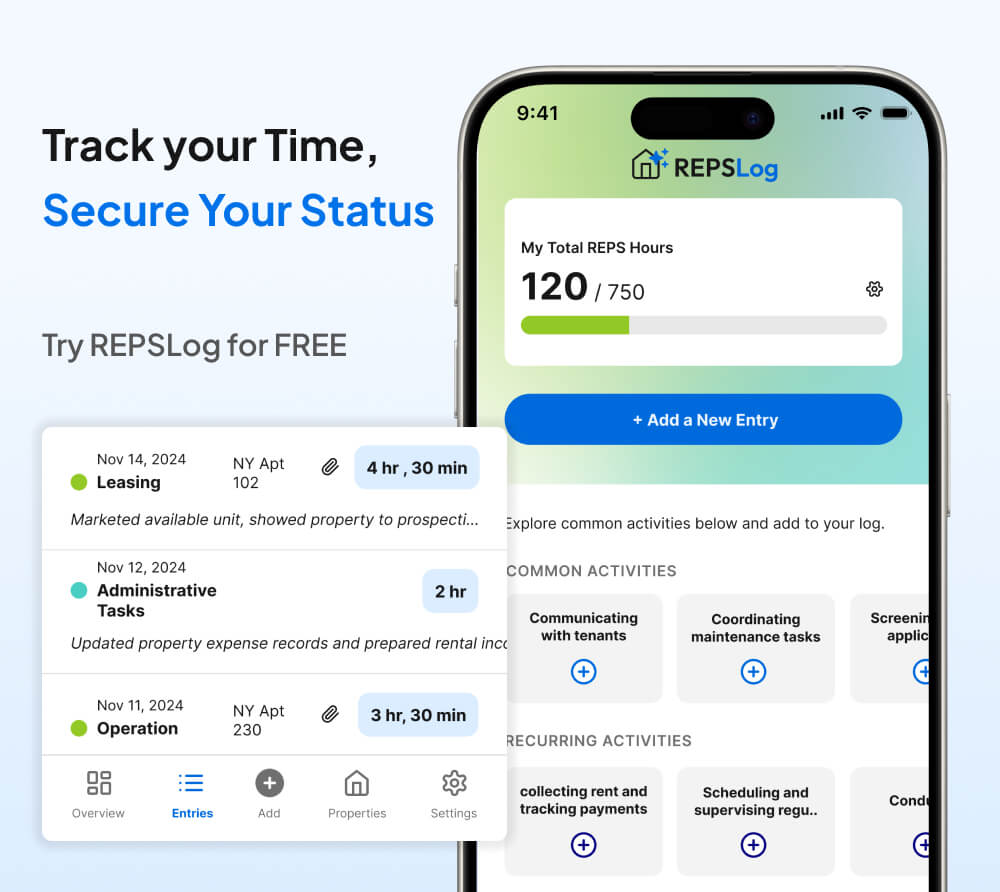
REPSLog was built for investors like you. It’s a mobile-first time tracking app that helps:
- Track real estate hours for REPS or STR eligibility
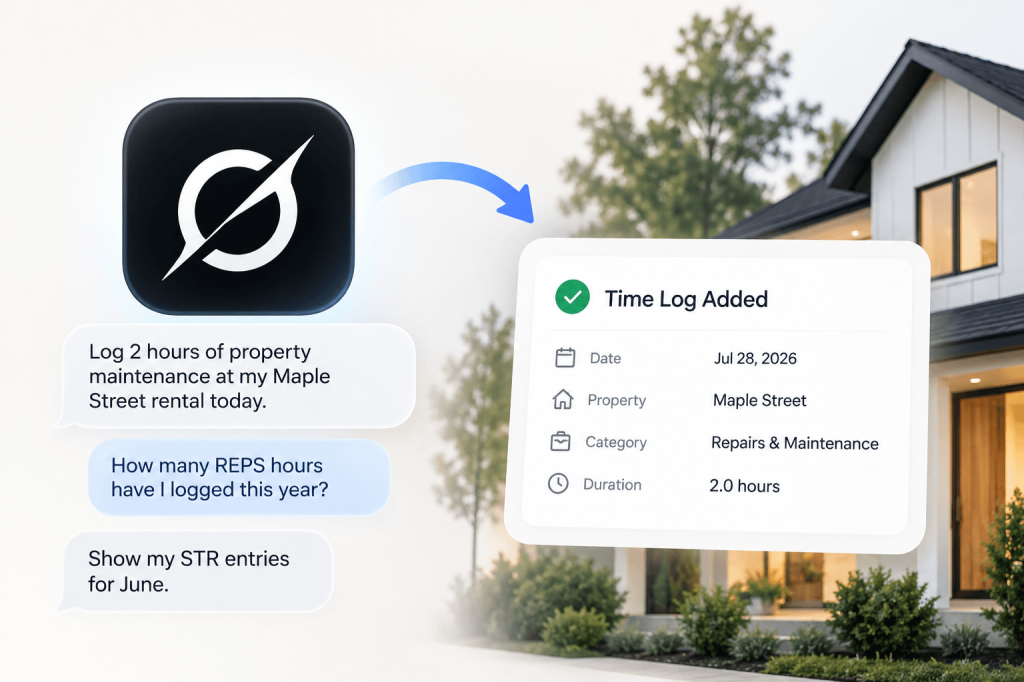
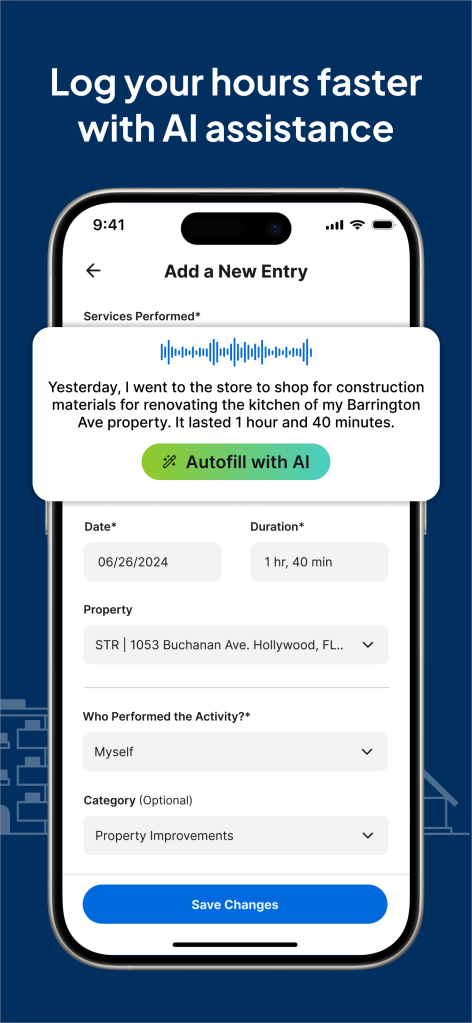
- Log tasks in seconds with AI-assisted entries
- Export audit-friendly logs
- Manage multiple participants (spouse, cleaner, etc.)
- Stay compliant and confident with IRS rules
- Track hours from any device- web, tablet and native mobile app (Apple and Android)
Thousands of investors use REPSLog to ensure they meet REPS thresholds, qualify for maximum bonus depreciation, and defend their deductions.
Final Thoughts
Whether you’re a REPS-qualified investor or taking advantage of the STR loophole, 2025 is the year to go big. With 100% bonus depreciation back, now is the time to invest smart, document well, and save massively on taxes.
And remember: the IRS rewards those who keep great records.
Download REPSLog today and make sure you’re tracking the time that saves you money.
Please Note: REPSLog is NOT a lawyer or CPA, and this is not legal or financial advice. Please consult a qualified professional for guidance regarding IRS rules and regulations.
Do this in REPSLog
- REPS Hour Tracking Goals (750 / 500 / 100): pick the 750, 500 or 100-hour test and watch progress per year and per property.
- Entry logging: what, when, how long, which property, with evidence, in one form.
- CPA-ready Export (PDF and CSV): a tax year as PDF and CSV, split by LTR and STR, with receipts.
Step by step in the Help Center: how to use it. Try REPSLog free for 14 days on iPhone, Android or the web app.