Real estate professional status and the short-term rental loophole are the two most powerful strategies for converting rental losses from passive to non-passive, allowing them to offset your W-2 or business income. Both achieve a similar tax result, but they work through different mechanisms, have different qualification requirements, and suit different investor profiles. This side-by-side comparison will help you decide which strategy fits your situation, or whether you should pursue both.
New to either strategy? Start with our STR loophole guide or our guide to Real Estate Professional Status.
Run your own numbers for either path: the STR tax savings calculator for a short-term rental, or the cost segregation calculator for a rental you own as a real estate professional.
How Each Strategy Works
Real Estate Professional Status (REPS)
REPS removes the automatic passive classification from rental activities. Under IRC Section 469(c)(7), if you qualify as a real estate professional and materially participate in your rental activities, the income and losses from those activities are treated as non-passive.
Qualification requires meeting two tests individually (not as a couple):
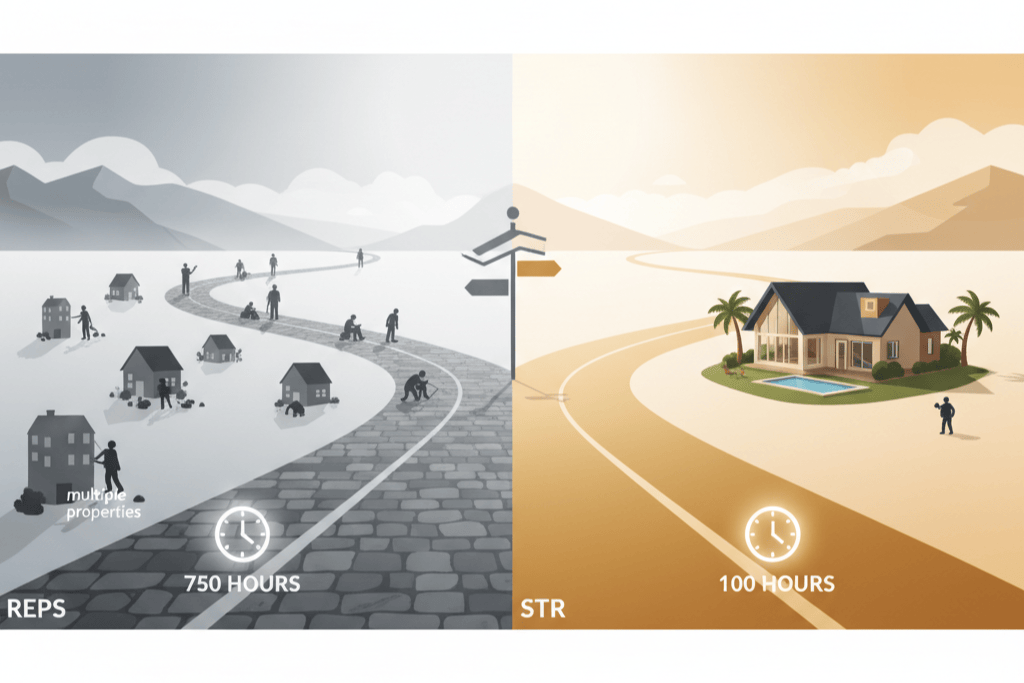
- More than 750 hours in real property trades or businesses in which you materially participate
- More than half of all personal services performed during the year are in real property trades or businesses
Once qualified, you must also demonstrate material participation in each rental activity (or in the grouped activity if you elect to group under Treas. Reg. 1.469-9(g)).
The STR Loophole
The STR loophole reclassifies short-term rental activities as non-rental activities. Under Treas. Reg. 1.469-1T(e)(3)(ii)(A), a rental activity with an average period of customer use of seven days or less is not treated as a rental activity.
When an activity is not a rental activity, it is treated as a regular trade or business activity. If you materially participate, the income and losses are non-passive. No REPS qualification is needed.
Qualification requires:
- Average guest stay of seven days or less during the tax year
- Material participation in the STR activity (typically Test 1: more than 500 hours, or Test 3: more than 100 hours and more than any other individual)
Side-by-Side Comparison
| Factor | REPS | STR Loophole |
|---|---|---|
| Legal basis | IRC 469(c)(7) | Treas. Reg. 1.469-1T(e)(3)(ii)(A) |
| Property type | Any rental property (long-term or short-term) | Only STR properties with average stays of 7 days or less |
| Hour requirement | More than 750 hours in real property trades + more-than-half test | Material participation in the STR activity (varies by test used) |
| Who must qualify | Individual taxpayer (one spouse on a joint return) | Individual taxpayer (spousal hours count for material participation under 469(h)(5)) |
| Impact on other rentals | Covers all rental activities where you materially participate | Only applies to the specific STR property meeting the 7-day test |
| W-2 compatibility | Difficult with a full-time job (more-than-half test) | Compatible with a full-time W-2 job |
| Grouping election | Available under Treas. Reg. 1.469-9(g) | Not applicable (STR is not a rental activity) |
| Best for | Full-time RE investors, non-working spouses, RE agents | W-2 earners with STR properties, side-hustle investors |
Who Should Pursue REPS
REPS is the right strategy when:
You or your spouse can dedicate real estate as your primary occupation. The more-than-half test is the limiting factor. If you work a 2,000-hour W-2 job, you need more than 2,000 hours in real estate to pass. For a full-time employee, this is essentially impossible. But for a non-working spouse, a part-time worker, or someone whose primary career is in real estate, REPS is highly accessible.
You own long-term rental properties. The STR loophole only applies to properties with average stays of seven days or less. If your portfolio consists of traditional long-term rentals with annual leases, the STR loophole is irrelevant. REPS is your only path to non-passive treatment.
You want portfolio-wide coverage. REPS qualification, combined with the grouping election and material participation, makes losses from your entire rental portfolio non-passive. The STR loophole only covers individual STR properties that meet the seven-day test.
Your spouse manages the rentals while you earn the W-2. The classic physician-spouse strategy. One spouse qualifies as a REPS, and the losses offset the other spouse’s high W-2 income on the joint return.
Who Should Pursue the STR Loophole
The STR loophole is the right strategy when:
You have a full-time W-2 job and cannot meet the more-than-half test. This is the loophole’s primary advantage. You can work a demanding full-time job and still qualify, because the STR loophole does not have a more-than-half test. You only need to materially participate in the STR activity.
You own short-term rental properties with average stays under seven days. Vacation rentals, weekend getaway properties, and urban STRs in high-tourism markets naturally produce short average stays.
You want a simpler qualification path. The STR loophole has fewer moving parts than REPS. There is no more-than-half test, no 750-hour threshold (unless you are using Test 1 for material participation with more than 500 hours), and no grouping election to consider.
You self-manage your STR. Self-managing an STR generates significant hours from guest communication, turnover coordination, and operational management. Meeting the more than 100 hours test (Test 3) or the more than 500 hours test (Test 1) is realistic for hands-on STR operators.
Can You Use Both Strategies?
Yes, and in some situations, using both is optimal.
Scenario: Mixed portfolio. You own three long-term rentals and two STRs. Your spouse qualifies as a REPS and materially participates in the long-term rentals (using the grouping election). The STR properties meet the seven-day test on their own. You materially participate in the STRs.
Result: The long-term rental losses are non-passive through REPS. The STR losses are non-passive through the STR loophole. You get full coverage across the entire portfolio.
Scenario: Belt and suspenders. You qualify as a REPS and also operate STRs meeting the seven-day test. In this case, the STR losses would be non-passive under either theory. Having both provides redundancy: if your REPS qualification is challenged, the STR loophole provides a fallback for the STR properties.
Scenario: Partial qualification. You do not qualify as a REPS (perhaps because your spouse took a part-time job and failed the more-than-half test), but your STRs still meet the seven-day test. The STR loophole preserves non-passive treatment for the STR properties even though REPS qualification was lost.
The Decision Framework
Answer these questions to determine which strategy to pursue:
Question 1: Do you or your spouse have a full-time non-real-estate job?
- Both spouses work full-time in non-RE careers: REPS is likely impossible. Pursue the STR loophole for STR properties.
- One spouse works full-time, other does not: The non-working spouse should pursue REPS.
- Neither spouse works full-time outside RE: Either or both spouses can pursue REPS.
Question 2: What types of properties do you own?
- Only long-term rentals: REPS is your only option. The STR loophole does not apply.
- Only STRs with average stays under seven days: The STR loophole may be sufficient. REPS provides additional coverage but may not be necessary.
- Mix of long-term and short-term: Consider pursuing both strategies.
Question 3: How many properties do you own?
- One to two properties: Material participation on each individually is feasible without the grouping election. The STR loophole may be the simpler path for STR properties.
- Three or more properties: The grouping election under REPS becomes more valuable as it simplifies material participation across the portfolio.
Question 4: How involved are you in day-to-day management?
- Highly involved (self-managing): Both strategies are accessible. Your hours should comfortably meet material participation tests.
- Property manager handles most tasks: Reaching material participation thresholds is harder. You need to maintain sufficient personal involvement regardless of which strategy you choose.
Common Misconceptions
Misconception 1: The STR loophole requires REPS. Incorrect. The STR loophole is a standalone provision. You do not need REPS qualification to use it.
Misconception 2: REPS automatically makes all losses non-passive. Incorrect. You must also materially participate in each rental activity (or in the grouped activity). REPS qualification alone is not sufficient.
Misconception 3: You can combine spousal hours for REPS qualification. Incorrect. Spousal hours combine for material participation under IRC Section 469(h)(5), but each spouse must independently meet the more than 750 hours and more-than-half tests for REPS qualification.
Misconception 4: The STR loophole has no hour requirements. Incorrect. The seven-day test exempts the activity from rental classification, but you still need to materially participate for losses to be non-passive. Material participation has its own hour requirements (Test 1: more than 500 hours; Test 3: more than 100 hours and more than anyone else; etc.).
Misconception 5: Property managers prevent you from qualifying under either strategy. Not necessarily. You can use a property manager and still qualify under both strategies, as long as you maintain sufficient personal involvement to meet the relevant tests.
Tax Impact Comparison
Consider a married couple with $400,000 in W-2 income and a $100,000 rental loss (after cost segregation depreciation) from a property worth $500,000.
Without either strategy:
- The $100,000 loss is passive and fully suspended (AGI exceeds $150,000, so no $25,000 allowance)
- Tax savings from rental loss: $0
With REPS (spouse qualifies):
- Loss is non-passive; deducted against W-2 income
- Tax savings at 35% marginal rate: approximately $35,000
With STR Loophole (property qualifies):
- Loss is non-passive; deducted against W-2 income
- Tax savings at 35% marginal rate: approximately $35,000
The tax result is identical. The difference is in how you qualify, the flexibility you retain, and the long-term implications for your portfolio.
Frequently Asked Questions
If I qualify as a REPS, do my STR properties automatically get non-passive treatment?
Not automatically. Your STR properties with average stays of seven days or less are not rental activities, so REPS (which applies to rental activities) does not directly apply. However, if you materially participate in the STR, the losses are non-passive through the STR loophole regardless of REPS. If the average stay exceeds seven days, the property is a rental activity, and REPS plus material participation makes it non-passive.
Which strategy is easier to document for the IRS?
The STR loophole has a more objective primary test: calculate the average stay length from your booking records. REPS documentation centers on proving more than 750 hours, which is inherently more subjective and audit-prone. Both require material participation documentation.
Can I switch from one strategy to the other year to year?
Yes. There is no lock-in. You qualify for REPS on an annual basis, and the seven-day test is calculated annually. Your tax treatment can change from year to year based on your facts and circumstances.
What if my STR average stay fluctuates around seven days?
This is a real risk. If your average exceeds seven days in a given year, the STR loophole does not apply for that year. The property reverts to a rental activity, and you would need REPS qualification plus material participation to avoid passive classification. Consider managing your booking policies to maintain a comfortable margin below seven days.
Is one strategy riskier in an audit than the other?
REPS is audited more frequently because the IRS specifically scrutinizes the 750-hour and more-than-half tests, especially for high-income taxpayers. The STR loophole is factually simpler (average stay is objective), but the material participation requirement still creates audit exposure. Both strategies require strong documentation.
Can a single person use both strategies?
Yes. A single taxpayer can qualify as a REPS (if they meet both tests) and also own STR properties qualifying under the seven-day rule. The combination provides maximum flexibility and redundancy.
Key Takeaways
- REPS covers all rental properties but requires more than 750 hours and the more-than-half test, making it incompatible with most full-time W-2 jobs
- The STR loophole covers only properties with average stays of seven days or less but has no more-than-half test, making it compatible with full-time employment
- Both strategies require material participation in the relevant activity for losses to be non-passive
- Using both strategies simultaneously is possible and optimal for mixed portfolios
- Spousal hours count toward material participation under 469(h)(5) but not toward REPS qualification
- The STR loophole is standalone and does not require REPS qualification
- Tax outcomes are identical once qualification is achieved; the strategies differ in their qualification paths and portfolio coverage
Track Hours for Both REPS and STR Qualification
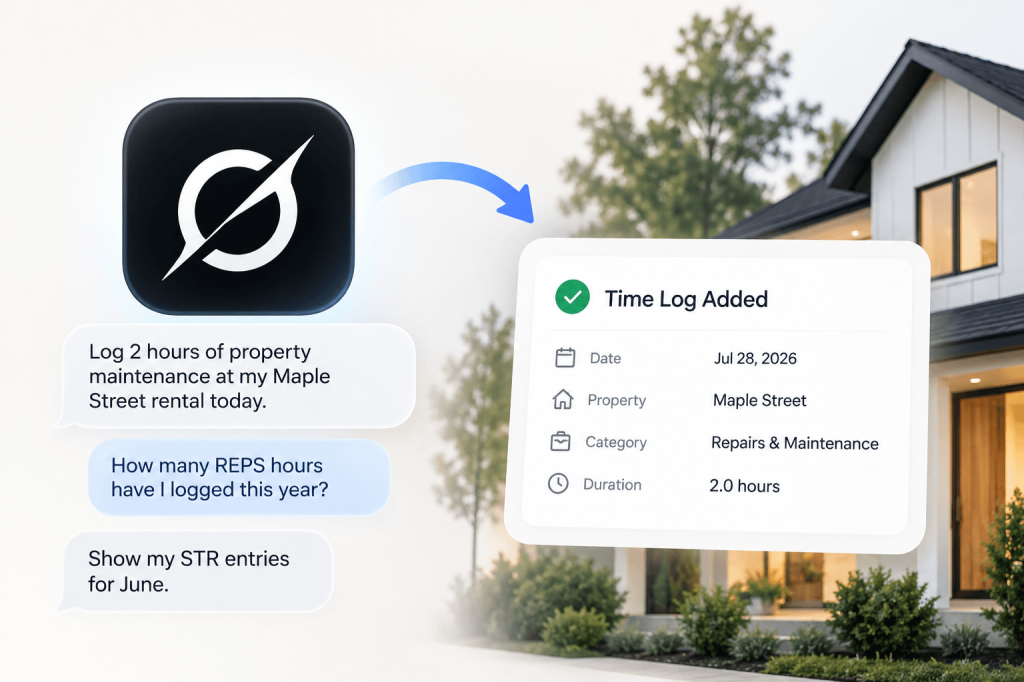
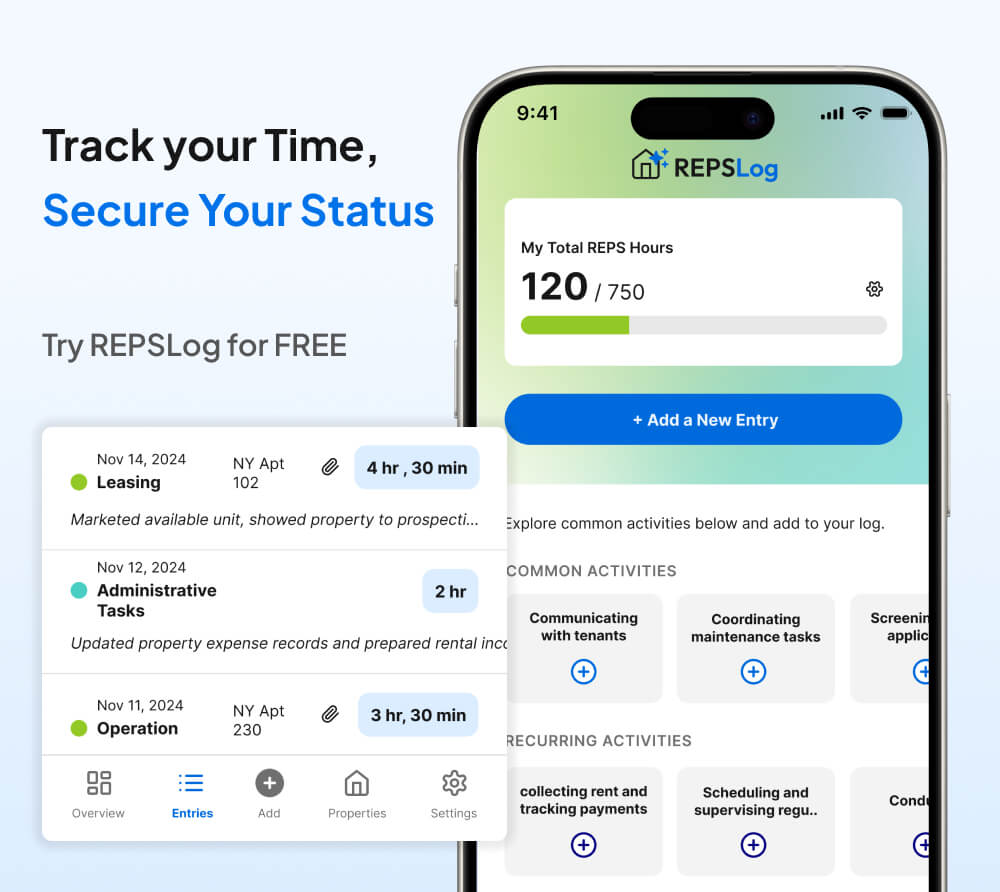
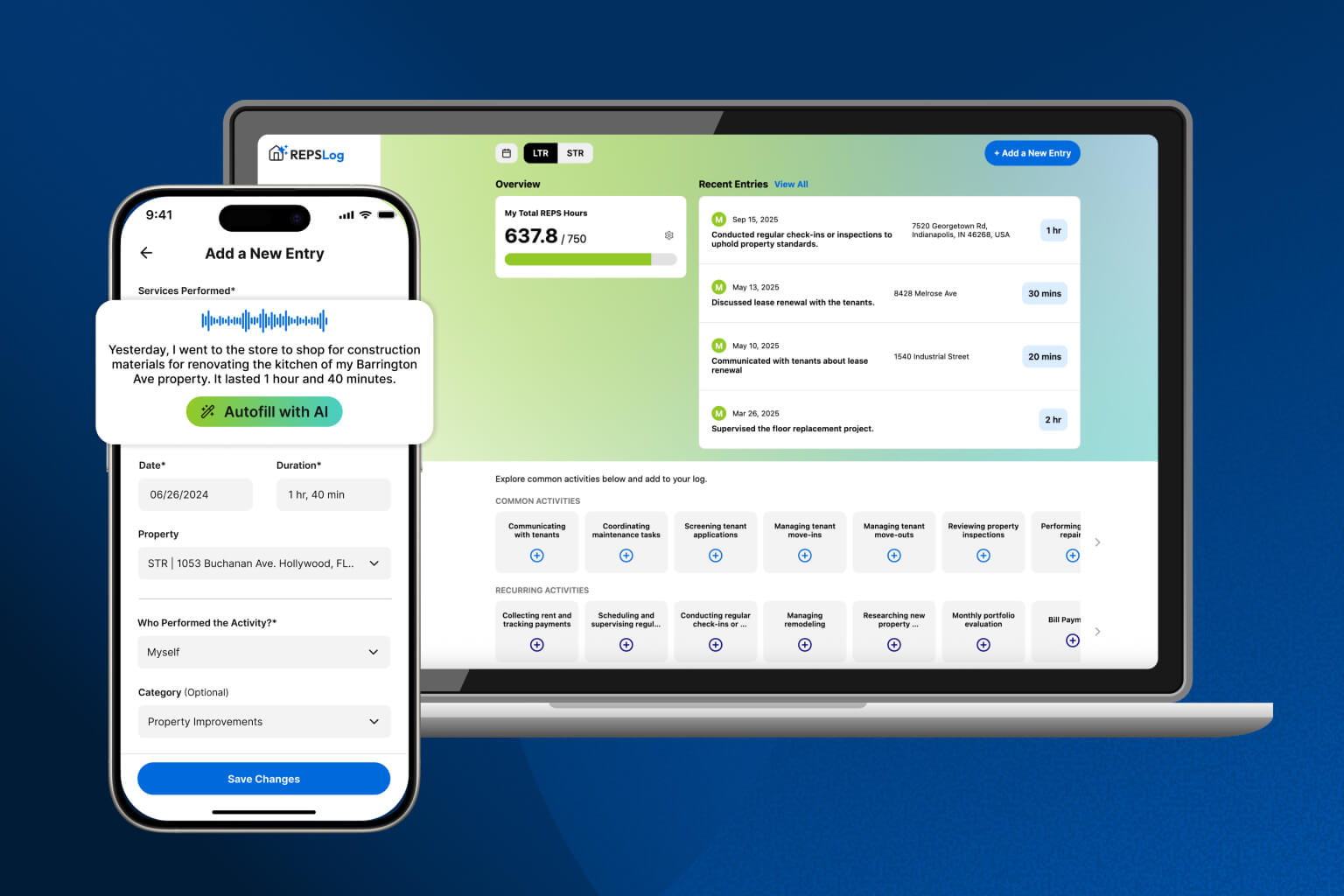
REPSLog supports tracking for both REPS qualification and STR material participation. Log activities by property, category, and participant to build the documentation you need regardless of which strategy you pursue.
Available on iOS | Android | Web
This article is for educational purposes only and does not constitute tax or legal advice. Consult a qualified tax professional for guidance tailored to your situation.
Do this in REPSLog
- Booking Calendar Sync (Airbnb, Vrbo and any iCal): pull every Airbnb, Vrbo or other booking into your log and get an entry suggested per stay.
- STR Loophole Tracking: a 100 or 500-hour counter per short-term rental, with hours by participant.
- Participants: log who did each activity, so spouse hours count where allowed and contractor hours stay separate.
Step by step in the Help Center: how to use it. Try REPSLog free for 14 days on iPhone, Android or the web app.