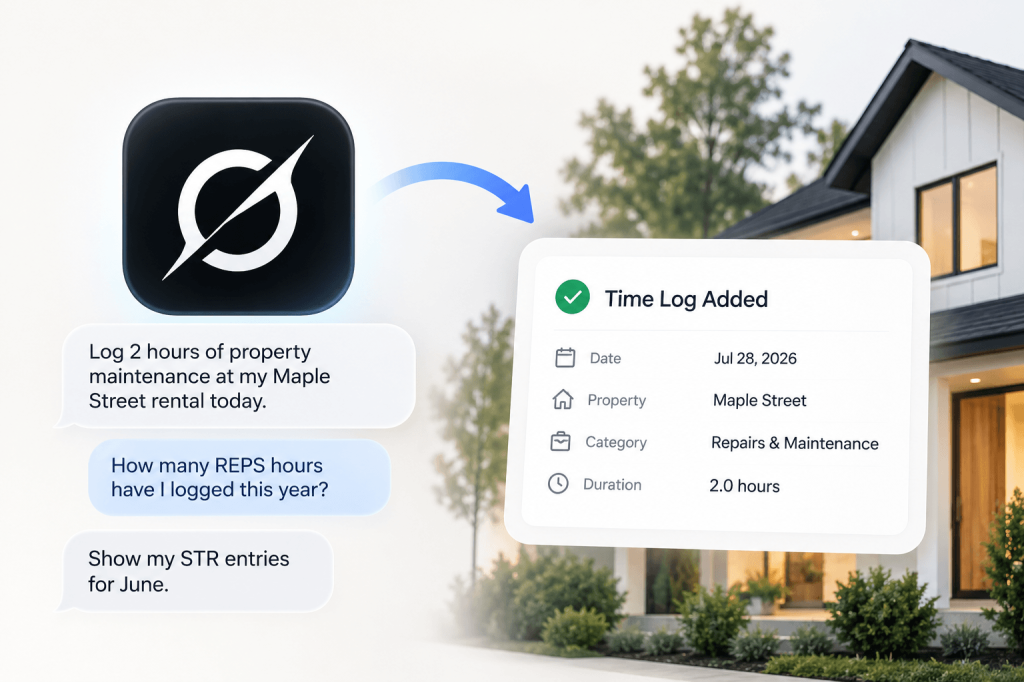
Tax Court decisions shape how the IRS enforces Real Estate Professional Status (REPS) rules and, more importantly, how taxpayers can successfully defend their claims. Every case is a lesson — some in what to do, others in what to avoid. The patterns that emerge across decades of litigation reveal exactly what the court values (contemporaneous records, specificity, credible testimony) and what it rejects (vague logs, reconstructed records, implausible hour claims).
This guide examines five significant Tax Court cases that establish key principles every REPS investor should understand. These are not obscure rulings — they are the cases that CPAs and tax attorneys reference when advising clients on documentation, qualification strategies, and audit preparation.
Case 1: Hairston v. Commissioner — The Reconstruction Trap
The Facts
The Hairstons were a married couple who claimed REPS through the wife’s real estate activities. Mrs. Hairston managed multiple rental properties while her husband worked a full-time job. On their tax return, they claimed substantial rental losses against the husband’s W-2 income.
When the IRS challenged the claim, the Hairstons presented a log of real estate hours. The problem was the log’s provenance: the court found that the records were not maintained contemporaneously. Instead, they were compiled after the fact — an exercise in reconstruction rather than real-time documentation.
The Court’s Analysis
The Tax Court scrutinized the log’s credibility and found it wanting. The entries lacked the natural variation you would expect from a genuine real-time record. The level of detail for activities months or years in the past strained credulity. And there was insufficient corroborating evidence (emails, receipts, third-party records) to independently verify the claimed hours.
The court acknowledged that Mrs. Hairston likely performed substantial real estate work. But “likely” is not “proven.” The burden of proof falls on the taxpayer, and a reconstructed log did not meet that burden.
The Lesson
Documentation must be contemporaneous. The Tax Court has drawn a clear line: logs created at or near the time of the activity are credible evidence. Logs assembled weeks, months, or years later are treated with skepticism — even if the underlying activities genuinely occurred.
This does not mean you must log activities at the exact minute they happen. Entries recorded the same day or within a few days are contemporary. Entries reconstructed at year-end or during an audit are not.
Practical application: Set a daily routine for logging your real estate activities. Three to five minutes at the end of each workday is sufficient. If you fall behind by a few days, catch up immediately. Never wait until tax season.
Case 2: Goshorn v. Commissioner — When W-2 Hours Are Underestimated
The Facts
The Goshorns presented a case where one spouse claimed REPS while also maintaining W-2 employment. The qualifying spouse argued that their W-2 hours were lower than the standard assumption, creating room for real estate hours to exceed the more-than-half threshold.
The IRS challenged this, arguing that the claimed W-2 hours were unrealistically low for the spouse’s position and employment arrangement. The court examined the employment records, the nature of the work, and the employer’s expectations.
The Court’s Analysis
The court looked beyond the taxpayer’s self-reported W-2 hours to evaluate what a reasonable person in that position would actually work. Factors included:
- The nature of the position (full-time salaried vs. part-time hourly)
- Employer records and documentation of hours worked
- Whether the position involved travel, on-call duties, or after-hours work
- The taxpayer’s own prior-year representations about their work schedule
The court found discrepancies between the claimed hours and the reality of the employment situation. The result: the more-than-half test failed because actual W-2 hours exceeded what the taxpayer reported.
The Lesson
Be honest about your W-2 hours. The IRS can and will verify your non-real-estate work hours. They can contact your employer, subpoena time records, and evaluate the reasonableness of your claimed hours against the requirements of your position.
Salaried employees are particularly vulnerable to this issue. Many claim they work “40 hours” but actually work 45-55 hours per week when early arrivals, late departures, working lunches, evening emails, and weekend work are included. If you are claiming REPS while maintaining W-2 employment, track your actual work hours — every hour, including the ones you do not get paid extra for.
Practical application: Keep a parallel log of your W-2 hours. Note actual start and end times. If you have a flexible arrangement that limits your hours, get that arrangement documented in writing by your employer. A letter confirming you work 20 hours per week is powerful evidence if the IRS assumes you work 40.
Case 3: Almquist v. Commissioner — The Grouping Election’s Importance
The Facts
The Almquists owned multiple rental properties and claimed REPS. When the IRS examined their return, the analysis turned on material participation. Without a grouping election, the Almquists needed to demonstrate material participation on each property individually.
The taxpayers argued they had spent significant total hours across all properties. But when the court analyzed their hours property by property, several individual properties fell short of the 500-hour threshold and did not satisfy any other material participation test.
The Court’s Analysis
The court applied the material participation tests on a per-property basis because the Almquists had not made a proper grouping election under Treas. Reg. 1.469-9(g). Even though their aggregate hours were substantial, the losses from individual properties where they could not demonstrate material participation were treated as passive.
The result was a partial disallowance: some properties’ losses were deductible (where material participation was demonstrated), and others were not (where it was not). The tax benefit was significantly reduced.
The Lesson
Make the grouping election. The Treas. Reg. 1.469-9(g) grouping election is one of the most important filings a REPS investor can make. Without it, you must prove material participation on every single rental property. With it, all properties are treated as a single activity, and you prove material participation once on the aggregate.
The election is made by attaching a statement to your tax return identifying the properties being grouped. Once made, it is generally binding for future years. The filing is simple, but failing to make it (or making it incorrectly) can have severe consequences.
Practical application: Discuss the grouping election with your CPA before filing your first REPS return. Ensure the election statement is properly formatted and attached. Keep a copy in your files. And continue to track hours by individual property even with the election in place — this provides backup documentation in case the election is ever challenged.
Case 4: A Pattern Seen in Multiple Cases — The Credibility of Vague Entries
The Facts
Across many Tax Court REPS cases, a recurring pattern emerges: taxpayers who present logs with generic, unspecific entries struggle to sustain their claims. While no single case is as famous as the others discussed here, the pattern is consistent enough to constitute a principle.
Typical failing entries include:
- “Property management” with no further detail
- “Research” without specifying what was researched or why
- “Administrative” without describing the administrative task
- “Maintenance” without identifying the property, the maintenance issue, or the work performed
The Court’s Analysis
When the court encounters vague entries, two problems arise:
- Verification is impossible. An entry that says “property management — 3 hours” cannot be verified against third-party records, physical evidence, or witness testimony because it contains no verifiable claims.
- Credibility is undermined. A taxpayer who genuinely performed 3 hours of specific property management work should be able to describe what they did. Inability to do so suggests either that the work was not performed, that the time was inflated, or that the log was reconstructed from memory without sufficient detail.
In case after case, the Tax Court has reduced or disallowed claimed hours when the log entries lacked specificity. Even when the taxpayer could elaborate verbally during the trial, the court has noted that verbal testimony at trial is less credible than contemporaneous written records.
The Lesson
Specificity is the standard. Every log entry should describe the activity with enough detail that a stranger could understand what was done, where it was done, and why it was done. The entry does not need to be a paragraph — two sentences that capture the essence of the activity are sufficient.
Good entry: “Drove to 456 Oak Ave, met HVAC technician for annual inspection, reviewed unit performance, authorized filter replacement and duct cleaning — $475 estimate approved.”
Bad entry: “HVAC stuff — 2 hours.”
Practical application: Develop a personal template for descriptions. Include the action performed, the property address, and any relevant detail (who you met with, what was decided, what the outcome was). With practice, detailed entries take no longer to write than vague ones.
Case 5: Patterns from Pohoski and Similar Cases — The Professional Spouse Standard
The Facts
In multiple cases involving high-income professional households, one spouse claims REPS while the other earns substantial W-2 income as a physician, attorney, executive, or similar high-hours professional. The IRS has frequently challenged these arrangements, particularly when the non-REPS spouse’s income is very high and the REPS spouse’s real estate hours are near the minimum threshold.
The typical scenario: a physician earns $500,000 in W-2 income. The physician’s spouse manages the couple’s rental properties and claims REPS. The couple deducts $200,000+ in rental losses (from cost segregation and accelerated depreciation) against the physician’s income, saving roughly $74,000 in federal taxes.
The Court’s Analysis
The Tax Court has generally upheld REPS claims by spouses if the documentation supports the claimed hours. The court recognizes that the spouse strategy is legitimate — the tax code explicitly allows one spouse on a joint return to qualify as a real estate professional.
However, the court applies heightened scrutiny in these cases:
- Are the hours credible? Does the qualifying spouse’s log reflect genuine, substantive real estate work, or does it look like make-work designed to hit 751 hours?
- Is the work necessary? If the couple uses a full-service property manager, what is the qualifying spouse actually doing? The court distinguishes between substantive oversight and duplicative busywork.
- Is the log contemporaneous? In high-stakes cases (large deductions, high income), the court expects robust documentation — not bare-minimum records.
Cases where the qualifying spouse presented detailed, contemporaneous logs with corroborating evidence have generally been sustained. Cases where the log was thin, vague, or reconstructed have not.
The Lesson
The spouse strategy works, but documentation must be exceptional. When the tax savings are large (as they typically are in high-income households), the IRS devotes more resources to the examination, and the court expects correspondingly strong evidence. A log that might survive scrutiny in a low-income case may not survive in a high-income case simply because the stakes justify deeper investigation.
Practical application: If you are the qualifying spouse in a high-income household, treat your REPS documentation as a professional obligation. Log daily. Be specific. Keep corroborating evidence. Export regular reports. And work with a CPA who understands the heightened scrutiny these claims receive.
Common Threads Across All Cases
Several principles emerge consistently across Tax Court REPS litigation:
The Burden of Proof Is on the Taxpayer
The IRS does not need to prove you failed to qualify. You need to prove you did qualify. When documentation is ambiguous, the ambiguity is resolved against the taxpayer.
Contemporaneous Records Are Given the Most Weight
The court consistently distinguishes between real-time records and after-the-fact reconstructions. The former are treated as credible evidence; the latter are treated with suspicion.
Specificity Builds Credibility
Detailed entries that describe real activities are harder to challenge than vague entries that could mean anything.
Corroborating Evidence Strengthens the Position
Logs supported by emails, receipts, photos, contractor records, and other independent evidence are significantly stronger than logs standing alone.
The Grouping Election Is Not Optional
Without a grouping election under Treas. Reg. 1.469-9(g), material participation must be proven property by property. This dramatically increases the documentation burden and the risk of partial disallowance.
Frequently Asked Questions
Can I use Tax Court decisions as precedent for my own REPS claim?
Tax Court decisions provide useful guidance but are generally not binding precedent in the way appellate court decisions are. However, IRS examiners are aware of these cases and tend to follow the court’s reasoning. Structuring your documentation to align with what the court has approved is a sound strategy.
Do I need to know these cases to qualify for REPS?
No. These cases illustrate principles, not requirements. You qualify for REPS by meeting the statutory tests (750 hours, more-than-half, material participation) and documenting your compliance. Understanding the cases helps you build better documentation.
How often does the IRS take REPS cases to Tax Court?
Most REPS audits are resolved at the examination or appeals level without going to Tax Court. Cases that reach the court typically involve large deductions, disputed facts, or fundamental disagreements about qualification. However, the principles established in court decisions influence how the IRS handles all REPS examinations.
What if the IRS examiner disagrees with my hours but I have strong documentation?
Strong contemporaneous documentation is your best defense. If the examiner disallows hours despite solid records, you can appeal within the IRS (via the Appeals division) or petition the Tax Court. Cases with strong records are frequently settled favorably at the Appeals level.
Are there recent cases that have changed the REPS landscape?
The core principles established in earlier cases remain intact. Recent decisions have continued to emphasize contemporaneous documentation, specificity, and the importance of the grouping election. No recent case has fundamentally altered how REPS qualification is analyzed.
How can I find and read Tax Court REPS decisions?
Tax Court opinions are publicly available on the U.S. Tax Court website (ustaxcourt.gov). Search for “real estate professional” or “IRC 469(c)(7)” to find relevant cases. Your CPA or tax attorney can also identify and summarize relevant decisions for your specific situation.

Key Takeaways
- Contemporaneous documentation is the single most important factor in Tax Court REPS cases — reconstructed logs are consistently rejected
- The grouping election under Treas. Reg. 1.469-9(g) is essential — without it, material participation must be proven per-property, dramatically increasing risk
- Specificity in log entries builds credibility; vague entries are routinely disallowed
- W-2 hours must be reported honestly — the IRS can verify actual hours through employer records
- The spouse strategy is legitimate but attracts heightened scrutiny in high-income households
- The burden of proof is always on the taxpayer — ambiguity is resolved against you
- Corroborating evidence (emails, receipts, photos, contractor records) significantly strengthens your position
How REPSLog Builds the Documentation Standard the Tax Court Expects
Every principle from these Tax Court cases points to the same conclusion: the quality of your documentation determines whether your REPS claim survives scrutiny. REPSLog is designed around the standards the Tax Court has established.
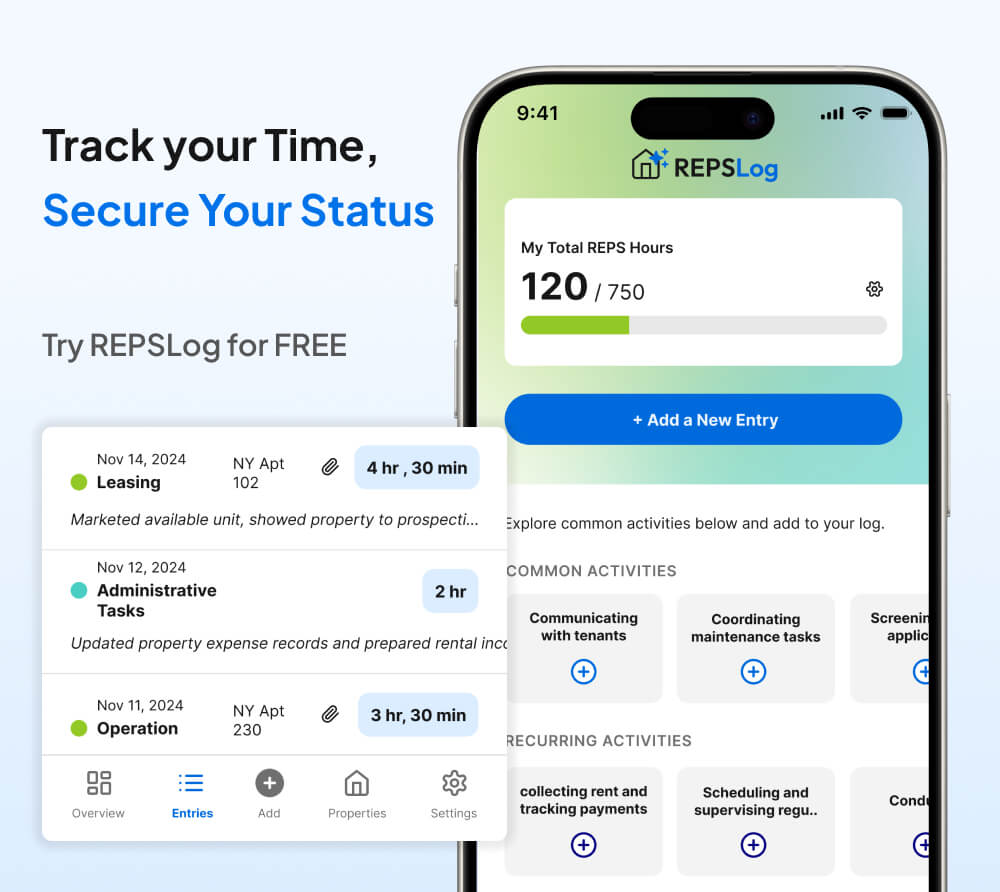
Automatic timestamps ensure contemporaneous recording. Property tags and activity categories prompt specific, detailed entries. Running totals monitor your 750-hour and more-than-half progress in real time. Exports provide audit-ready reports that align with what examiners and the court expect to see.
The investors who win in Tax Court are the ones who treated documentation as part of the job. REPSLog makes it the easiest part.
Available on iOS and Android, or on the web at app.reps-log.com. Start tracking your hours free →

This article is for educational purposes only and does not constitute tax or legal advice. Consult a qualified tax professional for guidance tailored to your situation.